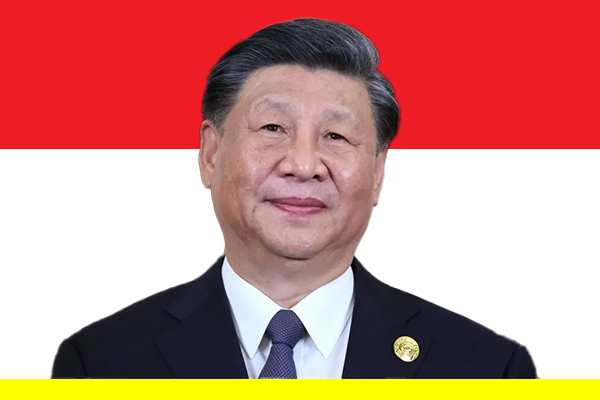
Mr. Xi Jinping
Name: Mr. Xi Jinping
In Office – Term 1: 15/03/2013-18/03/2018
Term 2: 18/03/2018-11/03/2023
Term 3: 11/03/2023 – Present
Political Party: Community Party of China
Home State: Beijing, China
Early Life and Family Background
Xi Jinping was born on June 15, 1953, in Beijing into a revolutionary family. His father, Xi Zhongxun, was a veteran communist and a founding leader of the People’s Republic of China. During the Cultural Revolution, Party authorities persecuted Xi’s family and expelled his father from the Communist Party. As a teenager, Xi endured “re-education through labor” in a rural village in Shaanxi province—an experience that shaped his resilience and political mindset. After returning to Beijing, he studied chemical engineering at Tsinghua University and later earned a doctorate in Marxist theory.
Climbing the Political Ladder
Xi Jinping began his political career in the provinces. He held various administrative and Party roles in Hebei, Fujian, Zhejiang, and briefly in Shanghai. In these roles, he promoted economic development and enforced Party discipline, earning a reputation as a capable and loyal official. In 2007, Party leaders appointed him to the Politburo Standing Committee—the CCP’s highest decision-making body—marking him as Hu Jintao’s likely successor.
Rise to National Leadership
In 2012, Xi Jinping became General Secretary of the Communist Party and Chairman of the Central Military Commission, making him China’s top leader. The following year, he became President of the People’s Republic of China. Xi quickly centralized power and moved away from the collective leadership style of his predecessors. He established himself as the most powerful Chinese leader since Mao Zedong.
Anti-Corruption Campaign and Power Consolidation
Xi launched a sweeping anti-corruption campaign targeting both top officials (“tigers”) and lower-level bureaucrats (“flies”). The campaign helped restore public trust in the Party. It also allowed Xi to remove political rivals and tighten his grip on power. In 2018, China’s legislature removed presidential term limits, allowing Xi to remain in office indefinitely.
Economic Reforms and “Common Prosperity”
Under Xi, China focused more on high-tech innovation, self-reliance, and income redistribution. He introduced the “Common Prosperity” campaign to reduce inequality and regulate sectors like technology and real estate. Though the economy kept growing, tighter government control raised concerns among business leaders and investors, leading to declining confidence in the private sector.
Assertive Foreign Policy and Global Ambitions
Xi adopted a more assertive foreign policy. In 2013, he launched the Belt and Road Initiative to expand China’s global reach. His administration increased military and diplomatic activity in the South China Sea, stepped up pressure on Taiwan, and took a tougher line with the United States, reflecting growing geopolitical tensions.
Legacy and Ideological Influence
Xi promoted his political doctrine—“Xi Jinping Thought on Socialism with Chinese Characteristics for a New Era”—and embedded it in the Party constitution. This secured his ideological dominance. He strengthened Party control over all sectors of society and reshaped Chinese governance. While his legacy is still unfolding, many already view him as a transformative figure who has fundamentally changed China’s domestic and global role.