Mr. Aeneas Mackay Jr.
In Office: 20 April 1888 – 21 August 1891
Political Party: Anti-Revolutionary Party
Home State: Nijmegen
Lifespan: 1838–1909
Country: Netherland
Image credits available here.
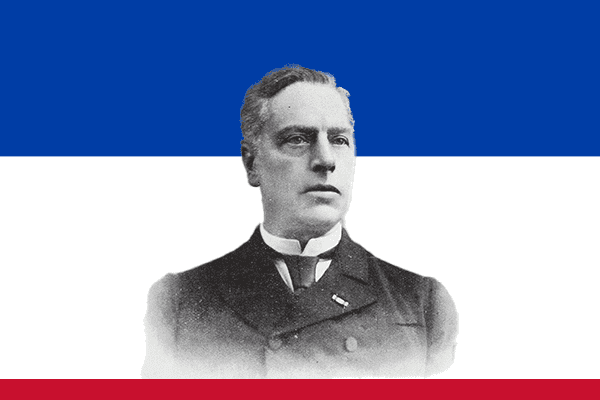
Early Life and Political Background
Aeneas Mackay Jr. was born on 10 November 1838 in Nijmegen, Netherlands. He belonged to a distinguished family that had strong political and administrative connections. His father, Aeneas Mackay Sr., also served in public office, and this background helped him develop an early interest in governance and law. Mackay studied law and later built a successful career in public administration and politics. His legal education gave him the ability to understand constitutional issues and parliamentary procedures in depth. These qualities made him a respected figure among conservative and Protestant political circles.
Rise in Dutch Politics
Mackay became active in national politics during a period when Dutch society was changing rapidly. New political movements were emerging, and religious groups were beginning to organize more strongly. He joined the Anti-Revolutionary political tradition, which defended Christian principles in government and society. Through his dedication and practical leadership, he gained the trust of fellow politicians. He served in important parliamentary roles and developed a reputation as a skilled negotiator. His balanced style and clear understanding of state affairs helped him rise steadily in Dutch public life.
Prime Minister of the Netherlands
In 1888, Aeneas Mackay Jr. became Prime Minister of the Netherlands. He led the first cabinet supported by a coalition of Anti-Revolutionaries and Catholics. This was a historic achievement because it showed that religious political groups could work together in government. His administration mainly focused on education policy, which was a central issue in Dutch politics at the time. Mackay supported greater equality for religious schools and aimed to protect the interests of Christian communities. His government also worked on administrative reforms and national stability. Although political opposition remained strong, he managed to guide his cabinet with discipline and moderation. His term ended in 1891, but his leadership created a foundation for future coalition governments in the Netherlands.
Legacy and Importance
Aeneas Mackay Jr. left an enduring legacy in Dutch political history. He demonstrated that coalition politics could succeed in a parliamentary system. His government strengthened the role of faith-based political cooperation and influenced the future development of Dutch party politics. Historians often remember him as a careful, principled, and intelligent leader who preferred stability over conflict. Even after leaving office, his contribution remained relevant because later Dutch governments followed the coalition model he helped establish. His life reflects the transition of the Netherlands from older elite politics to a more organized and party-based democratic system.
Conclusion
Aeneas Mackay Jr. was more than just a Prime Minister; he was a pioneer of coalition politics in the Netherlands. His term from 1888 to 1891 helped reshape Dutch government and highlighted the importance of cooperation between political groups. Through his legal knowledge, calm leadership, and commitment to Christian values, he earned a respected place in Dutch history. Today, he is remembered as a significant statesman whose influence continued long after his time in office.