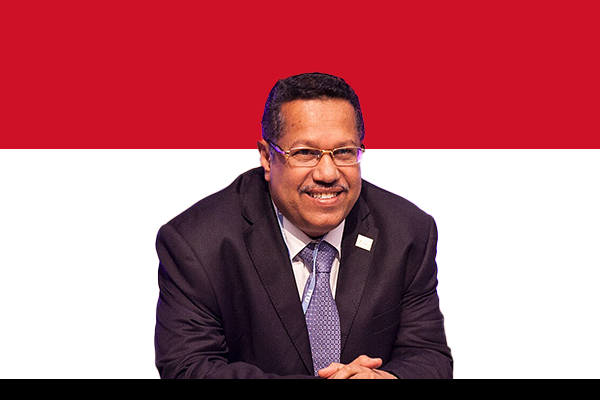
Early Life and Political Background
Ahmed Obaid Bin Dagher was born in Yemen and developed an early interest in public affairs and governance. He pursued education that prepared him for political and administrative responsibilities, gradually building a career within state institutions. In his early political life, he became associated with national movements that emphasized unity and state stability. Over time, his pragmatic approach allowed him to work across shifting political landscapes, a skill that later defined his leadership style.
Rise in Government Service
Before becoming prime minister, Bin Dagher held several important governmental roles. He served in ministerial positions that exposed him to Yemen’s economic and administrative challenges. These roles strengthened his reputation as an experienced administrator capable of handling complex portfolios. His ability to manage bureaucracy and negotiate political tensions made him a suitable candidate for higher office during a time when Yemen required steady leadership.
Tenure as Prime Minister of Yemen
Ahmed Obaid Bin Dagher assumed the office of Prime Minister at a critical moment in Yemen’s modern history. His government operated under extraordinary circumstances, as conflict had disrupted normal state functions. Despite these challenges, he worked to maintain the continuity of government and uphold the legitimacy of state institutions.
As prime minister, Bin Dagher focused on restoring basic administrative operations and supporting the internationally recognized leadership. He emphasized coordination between ministries, attempted to stabilize public services, and sought to address the humanitarian and economic difficulties facing the population. His leadership required balancing political realities with urgent national needs.
Governance Style and Key Priorities
Bin Dagher adopted a practical and consensus-oriented leadership style. He believed in dialogue among political actors and often stressed the importance of national unity. His priorities included strengthening state authority, improving economic management, and ensuring that government institutions continued to function despite instability.
He also highlighted the role of international cooperation in Yemen’s recovery. By engaging with regional and global partners, he aimed to secure political support and economic assistance. While progress was limited by ongoing conflict, his efforts reflected an understanding of Yemen’s interconnected political and economic challenges.
Challenges and Criticism
Like many leaders during periods of crisis, Ahmed Obaid Bin Dagher faced criticism. Some observers questioned the effectiveness of his government in addressing economic decline and public service delivery. Others pointed to internal political disagreements that limited decisive action. However, these challenges were deeply tied to the broader national situation, making governance exceptionally difficult.
Legacy and Political Significance
Ahmed Obaid Bin Dagher’s tenure as prime minister represents a chapter in Yemen’s struggle to preserve state institutions amid conflict. His experience illustrates the complexities of leadership during national crises. While opinions on his performance vary, he remains an important figure in Yemen’s recent political history, symbolizing efforts to maintain governance, legitimacy, and dialogue in challenging times.
Conclusion
Prime Minister Ahmed Obaid Bin Dagher played a crucial role during a defining period for Yemen. Through his administrative experience and pragmatic leadership, he sought to navigate the country through instability. His career reflects both the limitations and responsibilities of political leadership in times of profound national difficulty.