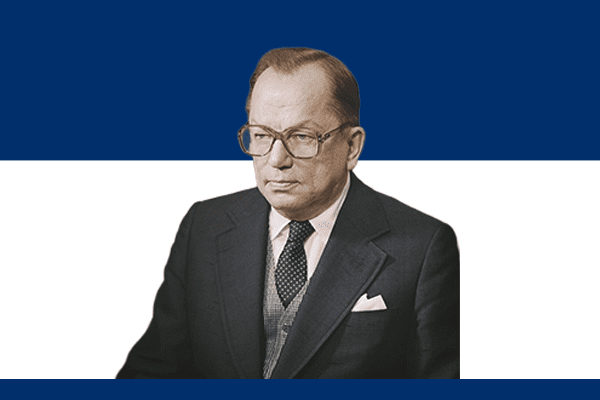
Mr. Ahti Karjalainen
In Office: 15 July 1970 – 29 October 1971
13 April 1962 – 18 December 1963
Political Party: Agrarian
Home State: Hirvensalmi
Lifespan: 1923–1990
Country: Finland
Image credits available here.
Early Life and Education
Ahti Karjalainen was born on February 10, 1923, in Hirvensalmi, Finland. He grew up in a modest family environment and developed a strong interest in education and public affairs from an early age. He attended the University of Helsinki, where he studied political science and economics. His academic background helped him understand national and international political systems, which later supported his political career.
During his youth, Finland faced economic struggles and political uncertainty. These experiences shaped Karjalainen’s political thinking and encouraged him to focus on economic stability and diplomatic cooperation.
Entry into Politics
Karjalainen joined the Agrarian League, later known as the Centre Party, and quickly gained recognition for his intelligence and communication skills. He worked closely with influential Finnish leaders and became involved in government affairs during the post-World War II period.
He entered Parliament in the 1950s and earned respect as a capable politician who understood economic planning and foreign relations. Instead of remaining limited to local politics, he actively participated in national decision-making processes.
First Term as Prime Minister
In 1962, Ahti Karjalainen became the Prime Minister of Finland for the first time. During his leadership, he focused on improving Finland’s economy and strengthening relations with neighboring countries, especially the Soviet Union. Finland maintained a careful balance between East and West during the Cold War, and Karjalainen supported this neutral foreign policy approach.
He encouraged trade agreements, industrial growth, and economic reforms that improved Finland’s development. His government also worked to maintain political stability during a period of international tension.
Foreign Policy and Diplomacy
Karjalainen became widely known for his diplomatic abilities. He served as Finland’s Foreign Minister several times and developed close connections with international leaders. He strongly supported Finland’s policy of neutrality and promoted peaceful cooperation between nations.
His relationship with Urho Kekkonen played an important role in Finnish politics. Together, they strengthened Finland’s ties with the Soviet Union while protecting Finnish independence and democratic institutions.
Karjalainen represented Finland in numerous international meetings and negotiations. Through active diplomacy, he helped Finland gain respect as a peaceful and cooperative nation.
Second Term as Prime Minister
Karjalainen served again as Prime Minister from 1970 to 1971. During this period, he continued focusing on economic modernization and international cooperation. Finland experienced social and industrial changes, and his government introduced policies that supported development and public welfare.
Although political disagreements created challenges for his administration, Karjalainen continued working toward national progress. His leadership reflected determination and practical decision-making during difficult political circumstances.
Personal Challenges and Decline
Despite his political achievements, Karjalainen faced personal struggles later in life. Health issues and alcohol-related problems affected his public image and political influence. These challenges gradually weakened his role in Finnish politics.
Even with these difficulties, many people continued respecting his earlier contributions to Finland’s economic and diplomatic success. His achievements in foreign policy and governance remained significant in Finnish history.
Legacy and Importance
Ahti Karjalainen left a lasting impact on Finland’s political development. He helped strengthen Finland’s international position during the Cold War and promoted economic growth through active leadership. His diplomatic efforts supported peaceful relations between major world powers while preserving Finnish independence.
Historians remember him as a skilled negotiator, intelligent policymaker, and experienced statesman. His work in government demonstrated the importance of diplomacy, cooperation, and national stability.
Conclusion
Ahti Karjalainen played a vital role in Finland’s political and diplomatic history. Through active leadership, he guided Finland during challenging international and domestic situations. His contributions to economic policy, foreign relations, and national development continue to hold historical importance in Finland today.