Mr. Alfred Domett
In Office: 6 August 1862 – 30 October 1863
Political party: Independent
Home State: Camberwell
Lifespan: 1811–1887
Country: New Zealand
Image credits available here.
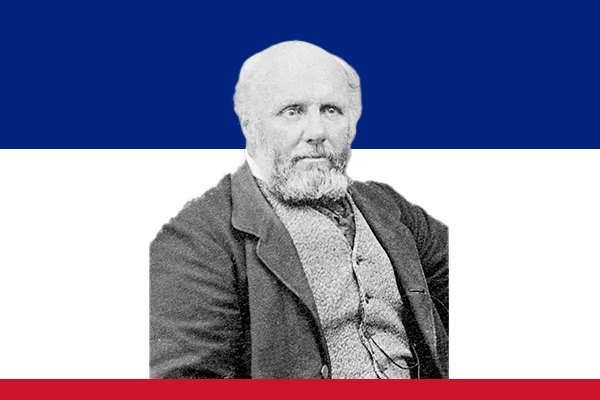
Early Life and Education
Alfred Domett was born on 20 May 1811 in Camberwell, Surrey, England. He grew up in a family that valued education and culture. He attended St John’s College, Cambridge, where he developed a passion for literature and poetry. He studied law at the Middle Temple, but he did not pursue a long legal career. Instead, he embraced public service and literature, two passions that defined his life.
Arrival in New Zealand
Domett sailed to New Zealand in 1842. He quickly immersed himself in colonial life and adapted to the challenges of a developing society. He worked in administrative roles, serving as Colonial Secretary for Nelson. His skills in governance and his understanding of colonial needs helped him rise as a respected figure. Domett built strong connections with Māori communities, showing his interest in cultural exchange and governance.
Political Rise
Domett entered politics as a member of the House of Representatives in the early 1850s. He spoke confidently, using his knowledge to influence debates and legislation. His leadership qualities became clear as he gained recognition among his peers. He played a major role in drafting laws and shaping early institutions of New Zealand. His reputation as both a politician and man of letters gave him a unique presence in public life.
Prime Ministership (1862–1863)
In 1862, Alfred Domett became the fourth Prime Minister of New Zealand. He led the country during a time of challenges and opportunities. Domett worked to strengthen the role of the central government. He supported policies that encouraged settlement and development. He also dealt with growing tensions between settlers and Māori, which later escalated into the New Zealand Wars.
Domett’s government took steps to improve infrastructure and encourage economic growth. He pushed for roads, communication systems, and administrative reforms. Although his term was relatively short, he created a foundation for future leaders to expand upon. His leadership style reflected his vision of a balanced government that encouraged development while considering cultural relationships.
Contributions Beyond Politics
Domett was not only a statesman but also a poet and writer. He wrote the long narrative poem “Ranolf and Amohia”, which explored Māori culture, mythology, and the natural beauty of New Zealand. Through literature, he celebrated the land and its people. His work combined his love for poetry with his experiences in New Zealand. He gained recognition in both New Zealand and England as a writer who blended governance with culture.
Return to England
In 1871, Domett returned to England after decades of service in New Zealand. He continued to write and publish poetry, reflecting on his experiences abroad. His literary contributions gained praise, and he maintained connections with other writers, including his close friend, the poet Robert Browning. Domett’s dual legacy as a statesman and poet made him a figure of both political and cultural significance.
Legacy
Alfred Domett died on 2 November 1887 in London. His legacy continues through both his political reforms and his literary achievements. New Zealand remembers him as a leader who combined governance with creativity. His poetry remains a cultural treasure, while his political work marked a stage in shaping the nation’s early governance.
Conclusion
Alfred Domett led New Zealand with vision and intellect. He strengthened government institutions, encouraged development, and left a literary legacy that celebrated the country’s land and culture. His short term as Prime Minister may have limited his political impact, but his wider contributions as a statesman and poet ensured his place in history.