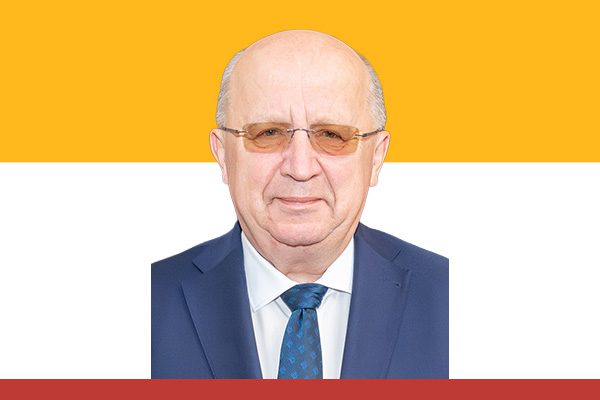
Early Life and Education
Andrius Kubilius was born on December 8, 1956, in Vilnius, Lithuania. He grew up in a family that valued education and intellectual development. During his childhood, Lithuania was part of the Soviet Union, and like many young Lithuanians, he witnessed political and social changes that later shaped his views.
Kubilius pursued higher education at Vilnius University, where he studied physics. He graduated successfully and worked as a scientist before entering politics. His academic background helped him develop analytical thinking and problem-solving skills, which later proved useful in his political career.
Entry into Politics
The political transformation of Eastern Europe during the late 1980s encouraged Kubilius to become involved in public affairs. He joined the Lithuanian independence movement and actively supported democratic reforms. As Lithuania sought freedom from Soviet control, he participated in efforts that promoted national independence and political change.
After Lithuania restored its independence in 1990, Kubilius entered national politics. He joined the conservative political movement and became an important member of the Homeland Union, one of Lithuania’s leading political parties.
Prime Minister of Lithuania
Andrius Kubilius first served as Prime Minister of Lithuania from 1999 to 2000. During this period, he worked to strengthen the country’s economy and support Lithuania’s integration into European institutions.
His second term as Prime Minister lasted from 2008 to 2012. This period coincided with the global financial crisis, which created serious economic challenges for Lithuania. Kubilius introduced reforms and economic measures designed to stabilize the country’s finances. Although some decisions proved unpopular because of spending cuts and austerity measures, many analysts credited his government with helping Lithuania recover from the crisis.
His leadership focused on fiscal responsibility, economic modernization, and long-term growth. Under his guidance, Lithuania strengthened its economic position and prepared for future development within the European Union.
Role in European Politics
After serving as Prime Minister, Kubilius continued his political work at the European level. He became a member of the European Parliament, where he focused on issues related to democracy, security, and international cooperation.
In the European Parliament, he advocated stronger relations between the European Union and neighboring countries. He supported democratic reforms in Eastern Europe and encouraged closer cooperation among European nations. His experience in national leadership allowed him to contribute valuable insights to discussions on European policy.
Leadership Style and Achievements
Kubilius is known for his practical and reform-oriented leadership style. He often emphasizes long-term solutions rather than short-term political gains. Throughout his career, he has supported democratic values, economic stability, and European integration.
His major achievements include guiding Lithuania through difficult economic conditions, strengthening public institutions, and promoting Lithuania’s role within Europe. Many observers recognize his commitment to responsible governance and national development.
Legacy
Andrius Kubilius remains an important figure in Lithuanian and European politics. His work as Prime Minister and Member of the European Parliament has influenced policies related to economic reform, democracy, and international cooperation. Through decades of public service, he has helped shape Lithuania’s modern political and economic landscape.