Mr. Ariel Sharon
In Office: 7 March 2001 – 14 April 2006
Political Party: Likud
Home State: Kfar Malal
Lifespan: 1928–2014
Country: Israel
Image credits available here.
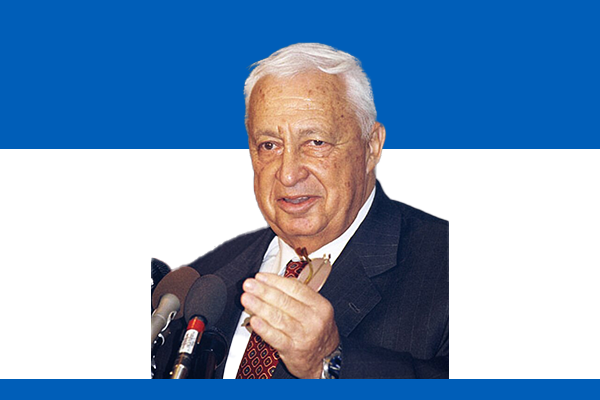
Early Life and Formative Years
Ariel Sharon entered the world on February 26, 1928, in Kfar Malal, a small farming community in British-mandated Palestine. His parents, Shmuel and Vera Scheinerman, raised him in a strict and disciplined environment that encouraged hard work and independence. Sharon absorbed their values early, and he developed a fierce devotion to the land and the emerging Zionist movement. As a teenager, he joined the Haganah, a Jewish paramilitary organization, and trained as a young fighter. His early experiences shaped his boldness, his confidence, and his determination—traits that later defined his military and political career.
Military Career and Rising Influence
Sharon built his legacy through the Israel Defense Forces (IDF). He fought in the 1948 Arab-Israeli War and quickly rose through the ranks. He commanded special operations units and built a reputation for aggressive tactics and strategic daring. During the 1956 Suez Crisis, he led the elite Unit 202 and demonstrated his trademark bold decision-making. His leadership strengthened his influence within the IDF, but it also sparked debates among senior officers who viewed his style as too independent.
In the 1967 Six-Day War, Sharon commanded an armored division and helped secure Israel’s decisive victory. He repeated his battlefield success in the 1973 Yom Kippur War when he led a critical counterattack across the Suez Canal. Many Israelis viewed him as a war hero, and his battlefield achievements propelled him into national prominence. Sharon eventually retired from the military as a major general and turned his attention fully to politics.
Entry into Politics and Rise to Power
Sharon entered politics in the 1970s and joined the Likud Party. He served in various ministerial positions, including agriculture, defense, and housing. In each role, he displayed a hands-on approach and a firm belief in strengthening Israel’s security and expanding settlement policies. As defense minister in 1981, he planned Israel’s invasion of Lebanon in 1982. The conflict, however, brought heavy criticism after the Sabra and Shatila massacre, and Sharon resigned under public pressure. Despite the setback, he refused to step away from political life.
Throughout the 1990s, Sharon rebuilt his reputation and authority inside Likud. He led party factions, influenced national policy, and positioned himself as a strong nationalist voice. When violence escalated during the Second Intifada, many Israelis lost confidence in existing leadership and turned toward Sharon’s strongman image.
Prime Ministerial Leadership
Sharon became Israel’s Prime Minister in 2001 during a period of intense turmoil. He promised security, stability, and decisive action. His government launched military operations against militant groups and constructed the security barrier along parts of the West Bank. These actions drew both praise and condemnation, but they significantly reduced attacks inside Israel.
In a surprising political shift, Sharon announced a unilateral disengagement plan from Gaza. He believed Israel needed to reshape its borders for future security. His decision shocked many of his allies, and he eventually left Likud to form a new centrist party, Kadima. Sharon oversaw the withdrawal from Gaza in 2005, a move that reshaped Israel’s internal political landscape.
Later Years and Legacy
In 2006, Sharon suffered a massive stroke that left him incapacitated until his death in 2014. His career left a complex legacy. Supporters admired his strength, strategic mind, and willingness to make bold decisions. Critics emphasized the controversies surrounding his military actions and political shifts.