Mr. Arthur Balfour
In Office: 12 July 1902 – 4 December 1905
Political Party: Conservative
Home State: Mayfair
Lifespan: 1848–1930
Country: United Kingdom
Image credits available here.
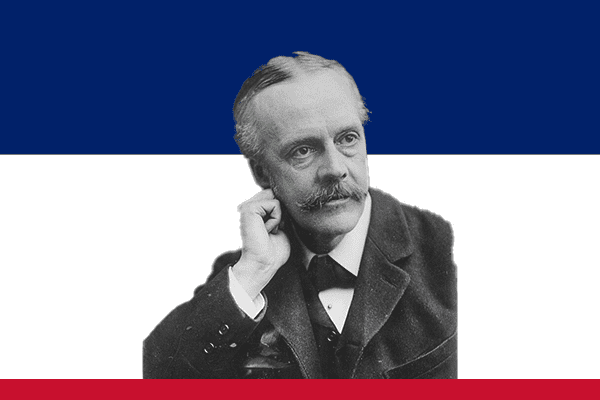
Early Life and Education
Arthur James Balfour was born on 25 July 1848 in Scotland into a wealthy and influential family. His upbringing exposed him to politics at an early age. He studied at Eton College and later attended the University of Cambridge. At Cambridge, he developed strong interests in philosophy, literature, and politics. These intellectual pursuits shaped his political thinking and public career.
Balfour entered politics in 1874 when he won a seat in the British Parliament as a member of the Conservative Party. Early in his career, he worked closely with his uncle, Lord Salisbury, who served several terms as Prime Minister. This connection helped Balfour gain experience and influence within the government.
Rise in Politics
Balfour quickly rose through the ranks of the Conservative Party. In 1887, he became Chief Secretary for Ireland. During this period, he took a firm stance against Irish nationalist movements. His policies aimed to maintain British authority in Ireland, though they also generated controversy.
Later, he served as Leader of the House of Commons and played an important role in guiding government legislation. His debating skills and strategic leadership made him one of the most prominent Conservative politicians of his time.
Prime Ministership (1902–1905)
Arthur Balfour became Prime Minister in 1902 after Lord Salisbury resigned. As Prime Minister, he faced several major political challenges. He worked to reform the British education system, resulting in the Education Act of 1902. This law reorganized schools and strengthened state involvement in education.
Balfour also dealt with economic and political debates over tariff reform. Some politicians supported protective tariffs to strengthen British industry, while others preferred free trade. This disagreement created divisions within the Conservative Party and weakened Balfour’s government.
In foreign policy, Balfour supported efforts to strengthen Britain’s international position. His government encouraged diplomatic cooperation with other powers. However, political disputes at home and declining public support eventually forced him to resign in 1905.
Later Political Career
Even after leaving the office of Prime Minister, Balfour remained active in British politics. He served in several important government positions. During the First World War, he became Foreign Secretary. In 1917, he issued the famous Balfour Declaration, which expressed British support for the establishment of a Jewish national home in Palestine. This document had a lasting impact on Middle Eastern politics and international relations.
Balfour also contributed to philosophical writing and intellectual discussions. His works reflected his deep interest in philosophy and religion.
Legacy
Arthur Balfour left a complex but important legacy in British history. As Prime Minister, he led the government during a period of political transformation and modernization. His education reforms shaped the British school system, while his later diplomatic actions influenced global politics.
Historians remember Balfour as a thoughtful and intellectual leader who approached politics with careful analysis and strategic thinking. Although his premiership faced difficulties, his contributions to diplomacy and policy ensured his lasting place in the history of the United Kingdom.