Mr. Arvid Lindman
In Office: 2 October 1928 – 7 June 1930
29 May 1906 – 7 October 1911
Political Party: Lantmanna Party
Home State: Österbybruk
Lifespan: 1862–1936
Country: Sweden
Image credits available here.
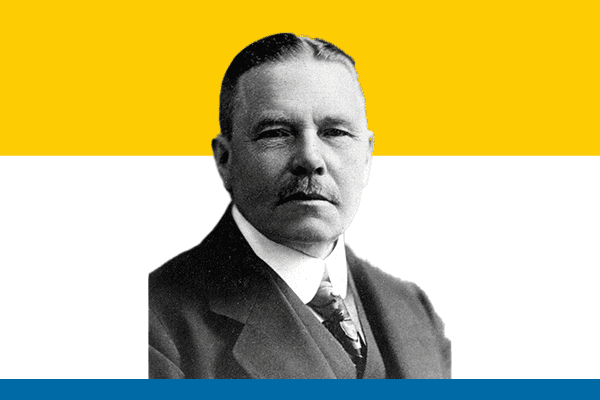
Early Life and Background
Arvid Lindman was born on September 19, 1862, in Österbybruk, Sweden. He grew up in a well-established family and received a strong education. He chose a naval career early in life and trained as an officer in the Swedish Navy. Through dedication and discipline, he rose through the ranks and gained valuable leadership experience.
Later, he transitioned into business and became involved in industrial enterprises. This experience gave him insight into Sweden’s economic structure and challenges. His background in both the military and business helped him develop a practical and results-oriented approach to politics.
Entry into Politics
Lindman entered politics as a member of the conservative party. He quickly established himself as a capable and thoughtful leader. In 1906, he became Prime Minister of Sweden for the first time. At that time, Sweden faced growing demands for political reform, especially regarding voting rights.
Instead of resisting change entirely, Lindman took a balanced approach. He recognized the need for reform and worked actively to implement changes while maintaining stability. His leadership reflected a willingness to compromise without abandoning core principles.
First Term as Prime Minister (1906–1911)
During his first term, Lindman introduced one of the most significant reforms in Swedish history: the expansion of suffrage. He supported a system that granted broader voting rights to men, which marked a major step toward democracy.
Rather than allowing unrest to grow, he addressed public demands through legislation. His government implemented electoral reforms that reshaped Sweden’s political landscape. Although these reforms did not establish full universal suffrage, they laid the groundwork for future democratic developments.
Lindman also focused on strengthening Sweden’s defense and economy. He promoted industrial growth and worked to ensure national stability during a period of change.
Second Term as Prime Minister (1928–1930)
Lindman returned as Prime Minister in 1928, leading a conservative government once again. By this time, Sweden had already embraced more democratic principles. He adapted to this new political environment and continued to play a key role in governance.
During his second term, he emphasized economic stability and efficient administration. He worked to address challenges related to economic fluctuations and social change. His leadership remained steady and pragmatic, even as political dynamics evolved.
Leadership Style and Ideology
Arvid Lindman led with a practical and moderate conservative approach. He did not resist change blindly; instead, he evaluated situations carefully and acted in the nation’s best interest. He believed in gradual reform, strong institutions, and national unity.
He communicated clearly and made decisions with confidence. His ability to balance tradition with progress allowed him to maintain credibility across different segments of society. He played a crucial role in bridging the gap between old systems and modern democracy.
Legacy and Impact
Arvid Lindman left a lasting mark on Swedish political history. He helped guide Sweden through a critical transition from limited suffrage to a more democratic system. His reforms created a foundation for future progress.
Rather than clinging to outdated practices, he actively shaped change in a controlled and constructive way. His leadership demonstrated that conservative values and democratic development could coexist. Today, historians recognize him as a key figure in Sweden’s political evolution.
Conclusion
Arvid Lindman remains an important figure in Sweden’s journey toward democracy. Through active leadership and thoughtful reform, he influenced the direction of the nation during a transformative era. His legacy continues to reflect the importance of balance, adaptability, and responsible governance.