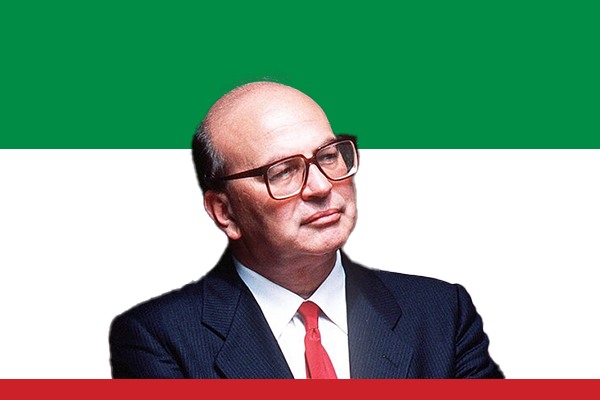
Early Political Career
Craxi began his political career in the 1950s, joining the Italian Socialist Party and quickly rising through its ranks. He actively engaged in youth movements and labor organizations, advocating for workers’ rights and social reform. In the 1960s and 1970s, he held various party leadership roles, where he actively influenced policy discussions on economic modernization, social welfare, and public administration. His strategic thinking and persuasive communication helped him gain recognition as a transformative figure in Italian politics.
Rise to Party Leadership
In 1976, Craxi became the Secretary of the PSI, and he actively redefined the party’s identity. He modernized its organizational structure, promoted internal reforms, and strengthened its electoral base. Craxi actively collaborated with other center-left parties to build coalitions, emphasizing pragmatic governance over ideological rigidity. Under his leadership, the PSI grew in national influence and became a key player in Italian politics. Craxi actively promoted policies that balanced social welfare with economic modernization, positioning the party as a credible alternative to Italy’s dominant Christian Democrats.
Prime Minister of Italy
Bettino Craxi served as Prime Minister from 1983 to 1987, actively implementing policies that redefined Italy’s economic and political environment. He actively worked on economic stabilization, controlling inflation, and managing public debt while promoting industrial growth. Craxi actively negotiated with trade unions, securing agreements that advanced labor rights while maintaining economic competitiveness.
Craxi actively pursued foreign policy initiatives, enhancing Italy’s international stature. He actively strengthened relationships with European allies and promoted Italy’s role within the European Community. His leadership during critical international negotiations, including economic and diplomatic agreements, reflected his proactive and pragmatic approach to governance.
Domestic Reforms and Controversies
During his tenure, Craxi actively introduced reforms aimed at modernizing Italy’s public administration and political institutions. He actively supported decentralization policies and promoted initiatives to improve governmental efficiency. At the same time, his administration faced controversies, particularly regarding corruption allegations, which he actively defended against in public forums. These controversies shaped public debate and influenced Italy’s political landscape for years to come.
Legacy and Impact
Even after leaving office, Bettino Craxi actively influenced Italian politics through writings, speeches, and party activities. He actively participated in debates on economic policy, European integration, and the role of socialism in modern governance. His tenure as Prime Minister remains a subject of study for political analysts and historians, reflecting his dynamic leadership style, commitment to modernization, and complex legacy in both domestic and international affairs.
Bettino Craxi’s political career demonstrates active leadership, reform-minded strategies, and a determination to strengthen Italy’s role in Europe and the world. From his rise within the Italian Socialist Party to serving as Prime Minister, Craxi actively shaped policies and left a lasting mark on Italy’s political and economic development.