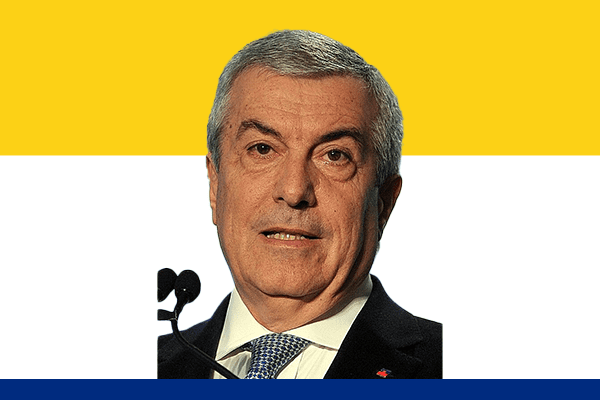
Early Life and Background
Călin Popescu-Tăriceanu was born on 14 January 1952 in Bucharest, Romania. He came from a family with a respected social and intellectual background. He completed his education at the Technical University of Civil Engineering of Bucharest, where he studied hydrotechnical engineering. Before entering politics, he worked in business and developed an interest in public life and national development. His early professional experiences helped him understand economic issues, entrepreneurship, and the importance of private sector growth. These experiences later influenced his political decisions and policies when he entered national leadership.
Political Career
After the fall of communism in Romania, Călin Popescu-Tăriceanu became active in politics. He joined the National Liberal Party (PNL) and soon became one of its prominent leaders. He worked to strengthen liberal democratic ideas in Romania and supported free-market reforms. Over time, he held several important government roles, including serving as Minister of Industry and Commerce in the 1990s. His political career steadily advanced because of his administrative ability and commitment to reform. In 2004, after the parliamentary elections, he became Prime Minister as the leader of a center-right coalition government.
Tenure as Prime Minister
Călin Popescu-Tăriceanu served as Prime Minister from 29 December 2004 to 22 December 2008. His government focused on economic reform, infrastructure development, and European integration. One of the most important achievements of his administration was helping Romania complete the final steps toward European Union membership, which officially began in 2007. This was a historic milestone for the country.
During his leadership, Romania saw significant economic growth. His government encouraged investment, supported business development, and introduced tax reforms. One well-known policy was the introduction of a flat tax system, which aimed to simplify taxation and encourage entrepreneurship. He also supported improvements in public administration and modernization of institutions.
However, his term also included political challenges. He often faced conflicts within coalition politics and disagreements with other leaders, including the president. Even so, he maintained his government and continued to push forward with reforms. His ability to manage a complex political environment showed his resilience and leadership skills.
Legacy and Importance
Călin Popescu-Tăriceanu’s legacy as Prime Minister remains significant in Romanian history. He led the country during a crucial period of transition and international integration. Romania’s entry into the European Union stands out as the most important achievement of his premiership. Many people also remember him for promoting liberal economic policies and supporting modernization.
Although opinions about his leadership differ, historians and political observers generally agree that his government helped strengthen Romania’s place in Europe. His contribution to democratic governance and economic reform makes him a notable national leader. Even after serving as Prime Minister, he remained active in Romanian politics and continued to influence public debate. Overall, Călin Popescu-Tăriceanu is remembered as a key Prime Minister who guided Romania through an important chapter of progress and transformation.