Mr. Charles Grey
In Office: 22 November 1830 – 9 July 1834
Political Party: Wing
Home State: Fallodon
Lifespan: 1764–1845
Country: United Kingdom
Image credits available here.
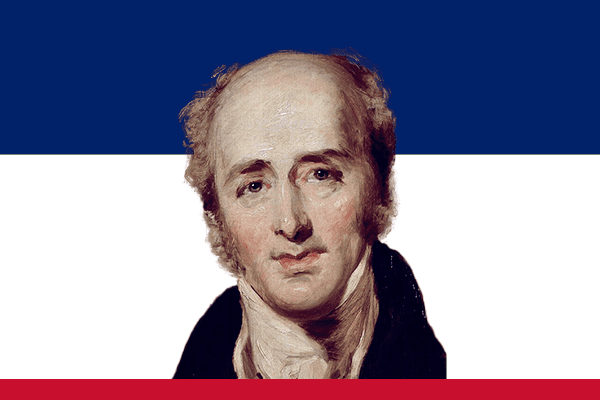
Early Life and Background
Charles Grey was born on 13 March 1764 in Northumberland, England. He belonged to an aristocratic family and inherited the title of Earl Grey after his father’s death. Grey received his education at Eton College and later studied at Trinity College, Cambridge. During his early years, he developed a strong interest in politics and public service.
Grey entered the Parliament of the United Kingdom in 1786 as a Member of Parliament for Northumberland. From the beginning of his career, he supported political reform and opposed corruption in the electoral system. Many British constituencies at the time had unfair representation, and Grey believed that the government needed significant reform to reflect the will of the people.
Rise in Politics
During the late eighteenth and early nineteenth centuries, Grey became an important member of the Whig Party. He gained respect among fellow politicians because of his commitment to constitutional reform and civil liberties. Grey supported measures that would increase political participation and improve fairness in government.
His political influence grew steadily, and he became one of the leading voices advocating parliamentary reform. Many citizens in Britain demanded change, especially as industrial cities expanded but lacked adequate representation in Parliament. Grey believed that reform would strengthen the political system rather than weaken it.
Prime Ministership (1830–1834)
Charles Grey became Prime Minister in 1830 during a time of social and political unrest. People across Britain demanded electoral reform and greater representation. Grey’s government responded by introducing the Reform Act 1832, one of the most important political reforms in British history.
The Reform Act eliminated many “rotten boroughs,” which had very small populations but still elected Members of Parliament. At the same time, the act granted representation to growing industrial cities such as Manchester and Birmingham. The law also expanded the voting rights of the middle class.
Passing the Reform Act proved difficult. Many conservative members of the House of Lords strongly opposed the measure. Grey, however, demonstrated strong leadership and political determination. After intense debate and public pressure, Parliament approved the Reform Act in 1832. This reform marked a turning point in British democracy.
Grey’s government also supported other reforms, including the abolition of slavery in most parts of the British Empire through the Slavery Abolition Act 1833. This legislation ended slavery across much of Britain’s colonial territories and represented a major humanitarian achievement.
Resignation and Later Life
Despite his political successes, disagreements within the cabinet created difficulties for Grey’s government. In 1834, he resigned from the position of Prime Minister and retired from active politics. After leaving office, he spent most of his time at his family estate in Northumberland.
Charles Grey lived a relatively quiet life after retirement. He remained respected as a statesman who had contributed significantly to the development of Britain’s political system. Grey died on 17 July 1845 at the age of 81.
Legacy
Historians remember Charles Grey as a reformer who helped modernize British politics. The Reform Act of 1832 opened the door for future democratic changes and improved representation in Parliament. His leadership during a critical period allowed Britain to adapt to social and economic changes without experiencing violent revolution.
Grey’s legacy continues to influence British democracy today. By promoting political reform, expanding representation, and supporting humanitarian legislation, Charles Grey helped shape the political development of the United Kingdom in the nineteenth century.