Mr. Chaudhri Muhammad Ali
In Office: 12 August 1955 – 12 September 1956
Political Party: Muslim Leage
Home State: Jalandhar Punjab
Lifespan: 1905–1982
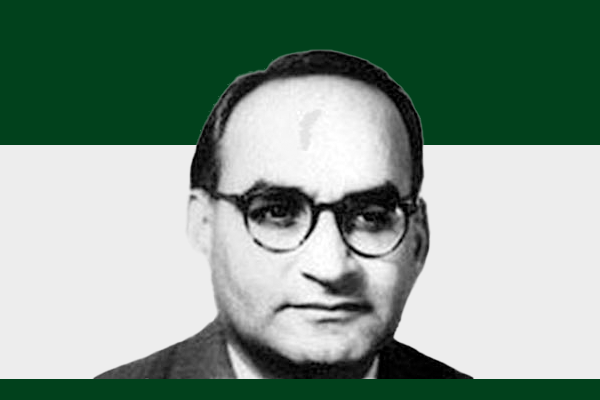
Early Life and Education
Chaudhri Muhammad Ali was born on July 15, 1905, in Jullundur (then part of British India, now in Punjab, India). Coming from a middle-class Muslim family, he showed early academic brilliance. After completing his initial education locally, he earned a degree in mathematics and science from Punjab University. His academic excellence and leadership potential led him to the prestigious Indian Civil Service (ICS) in 1928.
Career in British India
As a member of the Indian Civil Service, Chaudhri Muhammad Ali held various high-ranking positions, including financial and administrative roles in the colonial government. Known for his honesty, efficiency, and meticulous work ethic, he gained respect among his peers and superiors alike. His bureaucratic experience would later prove invaluable during Pakistan’s formative years.
Role in the Creation of Pakistan
Chaudhri Muhammad Ali was among the key bureaucrats who facilitated the partition of British India in 1947. Tasked with overseeing the complex division of assets, civil services, and institutions, he worked closely with both Indian and Pakistani leaders. His technical expertise and neutrality were crucial during one of the most turbulent periods in South Asian history.
Political Rise and Prime Ministership (1955–1956)
Following independence, Chaudhri Muhammad Ali transitioned from civil service to politics. Backed by his strong administrative credentials, he was appointed Prime Minister of Pakistan on August 11, 1955. His tenure, though brief, was historically significant.
Key Achievements:
- Drafted and enacted Pakistan’s first constitution (1956): As the head of the Constituent Assembly, he played a central role in formulating the document that declared Pakistan an Islamic republic with a parliamentary form of government.
- Reorganized Pakistan’s provinces into One Unit: He introduced the “One Unit Scheme,” merging the four provinces of West Pakistan into a single administrative unit to ensure parity with East Pakistan.
- Economic and administrative reforms: He worked to strengthen institutions, stabilize the economy, and enhance civil-military coordination.
- Despite facing political challenges and opposition, his leadership left a lasting mark on the country’s constitutional framework.
Legacy and Contributions
Chaudhri Muhammad Ali’s most enduring legacy is his authorship of Pakistan’s first constitution, promulgated on March 23, 1956. It established Pakistan as a sovereign Islamic Republic, enshrined fundamental rights, and introduced democratic governance structures. Although later abrogated, the 1956 Constitution remains a landmark in Pakistan’s legal history. He is widely admired for his integrity, vision, and devotion to democratic values. His commitment to public service continues to inspire generations of Pakistani leaders and policymakers.
Later Life and Death
After resigning in 1956, Chaudhri Muhammad Ali retired from active politics but continued to serve Pakistan through writing and public discourse. He remained a respected voice on governance and constitutional matters. He passed away on December 1, 1980, leaving behind a legacy of honest leadership and constitutional reform.