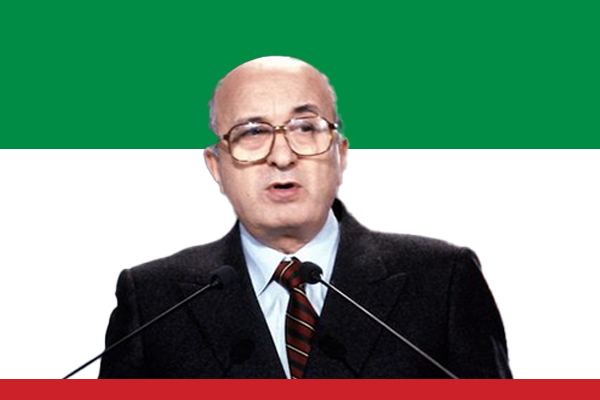
Prime Minister Ciriaco De Mita: A Statesman of Italy
Ciriaco De Mita, a distinguished Italian politician, actively shaped Italy’s political landscape over several decades. Born on February 2, 1928, in Nusco, Avellino, De Mita entered politics with a strong commitment to the Christian Democracy (Democrazia Cristiana, DC) party. He actively worked to modernize Italy’s political system, strengthen democratic institutions, and implement economic policies that promoted national growth and social welfare.
Early Political Career
De Mita began his political journey in the 1950s, joining the Christian Democracy party and quickly establishing himself as a skilled organizer and strategist. He actively engaged in local politics, winning elections to municipal councils and regional assemblies. His early political activities focused on economic development, education, and infrastructure improvements, where he actively pushed for projects that benefited southern Italy.
By the 1960s and 1970s, De Mita rose to prominence within the DC party. He actively mentored younger politicians and influenced policy discussions, emphasizing modernization, social justice, and political stability. His ability to build consensus and mediate internal party conflicts positioned him as a key figure in Italian politics.
Leadership in Christian Democracy
In the late 1970s and early 1980s, De Mita actively held leadership positions within the Christian Democracy party, steering the party through turbulent political periods. He actively worked to reform internal party structures, strengthen regional branches, and modernize Italy’s approach to governance. De Mita emphasized transparency, efficiency, and collaboration across political factions, actively shaping the party’s strategy and electoral successes.
Prime Minister of Italy
Ciriaco De Mita served as Prime Minister from April 1988 to July 1989, actively implementing policies that addressed economic challenges, social issues, and political reforms. He actively managed Italy’s public finances, controlling inflation and promoting industrial development. De Mita actively negotiated with labor unions, business leaders, and regional authorities to secure agreements that balanced economic growth with social welfare.
On the international stage, De Mita actively represented Italy in European and global forums. He actively participated in European Community negotiations, promoting Italy’s economic and diplomatic interests. His proactive foreign policy strengthened Italy’s role in Europe and enhanced its international reputation.
Domestic Reforms and Political Influence
During his tenure, De Mita actively introduced initiatives to reform Italy’s administrative system, focusing on efficiency and modernization. He actively promoted policies aimed at improving infrastructure, education, and public services. Even after leaving the Prime Minister’s office, he actively influenced Italian politics as a member of parliament and party leader, mentoring new political leaders and shaping legislative priorities.
De Mita also actively addressed political corruption and promoted ethical governance, striving to strengthen public trust in Italy’s institutions. His political approach combined pragmatism with a commitment to social justice, leaving a legacy of careful policy planning and strategic leadership.
Legacy and Contribution
Ciriaco De Mita’s political career demonstrates active leadership, dedication to public service, and a commitment to Italy’s modernization. From his early work in local politics to serving as Prime Minister, De Mita actively shaped Italy’s political, economic, and social landscape. His influence extended beyond his tenure, guiding new generations of politicians and leaving a lasting imprint on Italy’s democratic institutions.
Ciriaco De Mita actively exemplified political leadership and statesmanship, steering Italy through challenging times while prioritizing modernization, social equity, and international engagement. His contributions continue to influence Italian politics and public policy today.