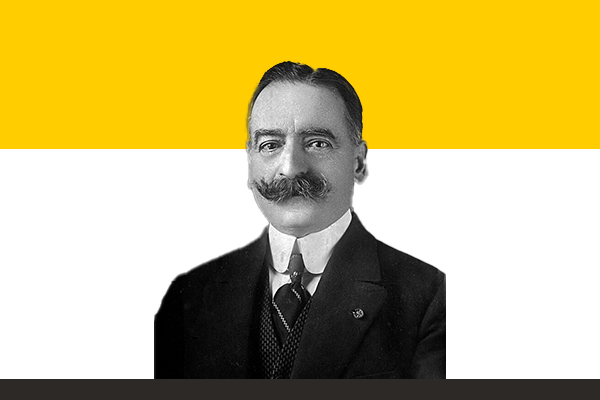
Early Life and Political Rise
Comte Charles de Broqueville was born on December 4, 1860, in Postel, Belgium, into a noble family with deep ties to public service. His upbringing instilled in him a strong sense of responsibility toward his country. He pursued studies that strengthened his understanding of law and governance, preparing him for a career in politics. De Broqueville entered the political arena as a member of the Catholic Party, where he quickly gained recognition for his intellect and integrity.
He actively supported reforms that balanced tradition with modernization. His commitment to national unity and social welfare earned him the trust of his peers, who saw in him a capable leader for challenging times. His reputation for fairness and his ability to mediate between conflicting interests paved the way for his rise to the premiership.
Leadership During World War I
De Broqueville became Prime Minister in 1911, a time when Europe stood on the brink of war. When World War I erupted in 1914, he took immediate and decisive action to defend Belgium’s neutrality. He mobilized the armed forces and coordinated with King Albert I to protect national sovereignty against German invasion.
Instead of yielding to pressure, De Broqueville strengthened Belgium’s resistance and sought international support. He actively negotiated with the Allies to ensure that Belgium’s struggle received global recognition. His leadership inspired unity among the Belgian people, who endured immense suffering during the war. He also managed the government-in-exile, which operated from Le Havre, France, maintaining the legitimacy of the Belgian state throughout the conflict.
Domestic Reforms and Governance
Even during wartime, De Broqueville did not neglect domestic affairs. He promoted welfare policies to assist war victims and their families. He ensured that soldiers and civilians received aid, housing, and healthcare. His government coordinated relief efforts with international organizations, ensuring that Belgium’s humanitarian needs were met.
After the war, De Broqueville returned to lead reconstruction efforts. He prioritized rebuilding infrastructure, restoring industry, and reestablishing political stability. His policies emphasized cooperation between government and private sectors to revive the economy. He supported the modernization of education and administration, ensuring that Belgium adapted to the demands of the post-war world.
Diplomacy and International Influence
De Broqueville played a crucial diplomatic role in strengthening Belgium’s international standing. He participated in negotiations that reaffirmed Belgium’s independence and sovereignty after World War I. His skillful diplomacy helped the country regain its territorial integrity and respect among European powers.
He also advocated for Belgium’s participation in the League of Nations, believing that international cooperation could prevent future wars. His vision reflected a balance between national interests and global peacekeeping efforts.
Later Years and Legacy
De Broqueville continued to serve his nation until his retirement in 1940. Throughout his political career, he remained dedicated to constitutional monarchy, social progress, and international peace. His legacy endures as one of resilience, pragmatism, and patriotic duty.
He passed away on September 5, 1940, but his contributions to Belgium’s political and social fabric remain deeply respected. His leadership during World War I established him as a symbol of courage and diplomacy under crisis.
Conclusion
Prime Minister Comte Charles de Broqueville guided Belgium through one of its darkest periods with steadfast determination and moral strength. By defending national independence, promoting social unity, and rebuilding the nation after war, he left an indelible mark on Belgian history. His example continues to inspire leaders who value integrity, resilience, and service above all.