Mr. Dick Schoof
In Office: 2 July 2024 – 23 February 2026
Political Party: Independent
Home State: The Hague
Lifespan: born 1957
Country: Netherland
Image credits available here.
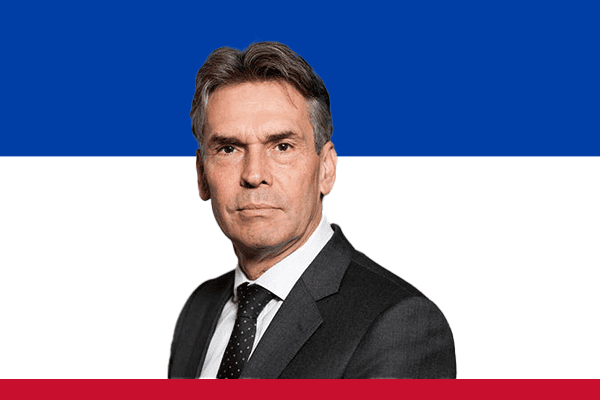
Early Life and Education
Dick Schoof was born on March 8, 1957, in Santpoort, Netherlands. He pursued higher education at Radboud University Nijmegen, where he studied urban planning. His academic background equipped him with a strong understanding of governance, infrastructure, and public policy. These early experiences laid the foundation for his long and distinguished career in the Dutch civil service.
Administrative Career
Before becoming Prime Minister, Schoof built a reputation as a highly competent civil servant. He held several important positions within the Dutch government. He served as Director-General for Public Order and Safety and later became the National Coordinator for Security and Counterterrorism. In these roles, he managed national security strategies and coordinated responses to crises.
His leadership was also demonstrated during his tenure as Director-General of the Immigration and Naturalisation Service (IND). Complex migration issues were addressed effectively under his supervision, and institutional reforms were implemented to improve efficiency. His work in these roles earned him respect across political parties.
Appointment as Prime Minister
In 2024, Dick Schoof was appointed as the Prime Minister of the Netherlands. A coalition agreement was reached after lengthy negotiations, and Schoof was chosen as a compromise candidate due to his non-partisan background. His appointment signaled a move toward pragmatic governance, where expertise and administrative experience were prioritized over traditional party politics.
The government was formed with the support of multiple parties, and stability was emphasized as a key objective. Responsibilities were assumed by Schoof with a focus on unity and effective decision-making.
Leadership Style and Policies
Dick Schoof’s leadership style is characterized by calm decision-making, strategic planning, and a focus on results. Policies have been shaped with careful consideration of long-term national interests. Emphasis has been placed on national security, economic stability, and migration control.
Reforms have been introduced to strengthen public institutions, and efforts have been made to enhance cooperation between government agencies. Transparency has been promoted, and public trust has been regarded as essential for governance.
Challenges and Achievements
Several challenges have been faced during Schoof’s tenure, including political fragmentation, economic pressures, and international uncertainties. These challenges have been addressed through collaborative approaches and evidence-based policymaking.
Achievements include improved coordination in national security, progress in migration policy, and strengthened administrative efficiency. Stability has been maintained in governance despite complex political dynamics.
Conclusion
In conclusion, Dick Schoof represents a modern approach to political leadership in the Netherlands. His career demonstrates how administrative expertise can be effectively translated into national leadership. Active decision-making, clear policy direction, and a commitment to public service define his tenure. As Prime Minister, he continues to guide the Netherlands through a period of transition and development, emphasizing stability, cooperation, and forward-looking governance.