Mr. Dudley Senanayake
In Office-Term 1: 26 March 1952 – 12 October 1953
Term 2: 21 March 1960 – 21 July 1960
Term 3: 25 March 1965 – 29 May 1970
Political Party: United National Party
Home State: Ceylon
Lifespan: 1911–1973
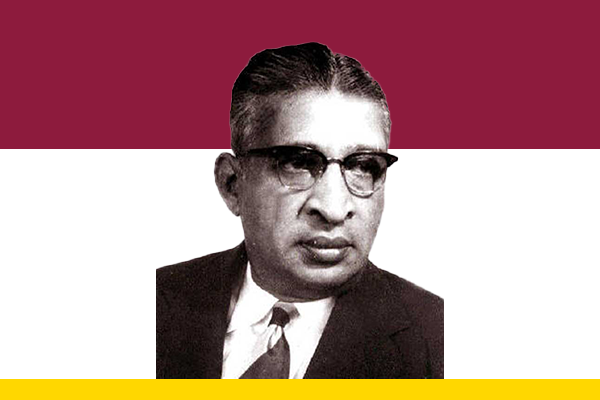
Early Life and Education
Dudley Shelton Senanayake, Sri Lanka’s second Prime Minister and a key figure in its early politics, was born on June 19, 1911, in Colombo. His father, Don Stephen Senanayake, became the first Prime Minister of independent Sri Lanka. Raised in a family dedicated to public service, Dudley attended S. Thomas’ College, Mount Lavinia, where he excelled in academics and sports. He later studied Natural Sciences and Law at the University of Cambridge. While in the UK, he actively engaged in student politics and developed a deep interest in liberal democratic ideals.
Entry into Politics and Early Career
In 1936, Dudley entered politics by winning a seat in the State Council. After Sri Lanka gained independence in 1948, he joined his father’s cabinet as Minister of Agriculture. In that role, he continued rural development programs and expanded land settlement schemes. He played a vital role in increasing food production and developing irrigation projects across the country.
First Term as Prime Minister
After D. S. Senanayake died suddenly in 1952, Governor-General Lord Soulbury appointed Dudley as Prime Minister. At age 41, he became the youngest Prime Minister in the Commonwealth. However, economic difficulties and rising living costs challenged his leadership. When he removed subsidies, large-scale protests erupted, culminating in the 1953 Hartal. These events led Dudley to resign from office, ending his first term.
Second and Third Terms
Dudley briefly returned to power in March 1960 but failed to secure a parliamentary majority, which forced his government to dissolve within months. In 1965, he led a coalition known as the National Government and began his most significant term as Prime Minister. He liberalized the economy, expanded agricultural reform, and strengthened food security. He also maintained a balanced foreign policy, improving Sri Lanka’s relations with both the West and Asia.
Leadership Style and Values
People admired Dudley Senanayake for his humility, honesty, and commitment to democracy. He opposed authoritarianism and promoted inclusive governance. He valued consultation over unilateral decision-making and earned the trust of various ethnic and religious groups. Unlike many contemporaries, he preserved a clean political record and stayed widely respected.
Death and Legacy
Dudley Senanayake passed away on April 13, 1973, at the age of 61. His death marked a major loss in Sri Lankan politics. People remember him today as a principled leader who upheld democratic values and national unity. His work in rural development and governance continues to inspire. Monuments, roads, and institutions across the country bear his name in honor of his legacy.