Early Life and Background
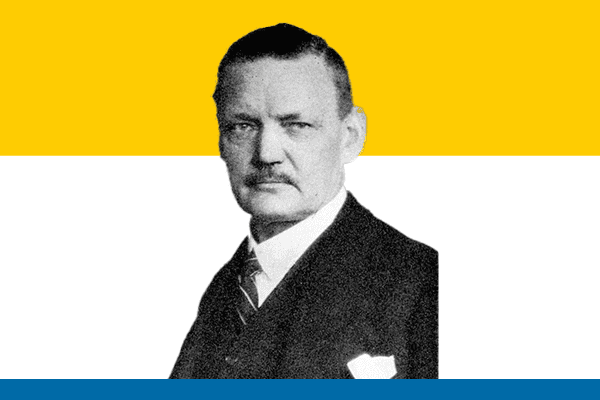
Felix Teodor Hamrin was born on 14 January 1875 in Mönsterås, Sweden. He came from a business-oriented family, as his father worked as a leather dealer. From an early age, Hamrin showed discipline and determination. Financial difficulties interrupted his formal education, but he did not allow those challenges to stop his growth.
Instead, he entered the business world and gained practical experience in trade and commerce. After studying at a business school in Gothenburg, he established his own wholesale company in Jönköping in 1903. Through hard work and dedication, he built a successful business career, which later strengthened his political reputation as a capable economic leader.
Political Career
Hamrin entered politics in the early twentieth century. He actively participated in liberal political movements and soon became a respected public figure. In 1906, he became a city councillor, marking the beginning of his political journey.
Later, he was elected to the Swedish Parliament, the Riksdag, where he strongly supported economic reform, religious freedom, and social progress. His business background helped him understand the financial challenges facing the country. Because of this, he gained recognition as a practical and intelligent policymaker.
Under Prime Minister Carl Gustaf Ekman, Hamrin served as Minister of Commerce and Industry from 1926 to 1928. Later, he took charge as Minister of Finance from 1930 to 1932. In both roles, he actively worked on economic policies and national financial stability.
Prime Minister of Sweden
In August 1932, after Carl Gustaf Ekman resigned following the Kreuger financial crisis, Felix Hamrin became the Prime Minister of Sweden. His appointment came at a difficult time when Sweden faced political instability and economic depression.
Hamrin’s government actively focused on restoring confidence in the nation’s economy and maintaining order during the election period. Although his term lasted only 49 days, it remains historically significant because it was the shortest prime ministerial term in Swedish history.
Despite the short duration, Hamrin handled his responsibilities with seriousness and professionalism. He guided the government through a sensitive transition and ensured that the democratic process continued smoothly.
Leadership and Contributions
Felix Hamrin actively contributed to Sweden’s financial reforms during one of the most difficult economic periods of the twentieth century. As Finance Minister and Prime Minister, he focused on reducing the effects of the Great Depression and stabilizing the country’s economy.
He later served as governor of Jönköping County, where he continued public service until his death. His administrative abilities and financial expertise earned him respect across political circles.
Personal Life
Hamrin married Elizabeth “Lizzie” Pennycock in 1900, and the couple had seven children. Alongside his political work, he maintained strong family values and remained deeply connected to his community.
He passed away on 27 November 1937 in Jönköping, Sweden. Even after his death, historians continue to recognize his contributions to Swedish governance and economic policy.
Conclusion
Felix Hamrin may have served as Prime Minister for only a brief period, but he left an important mark on Swedish political history. His active leadership, financial expertise, and dedication to public service helped Sweden during a challenging era. His legacy remains an example of responsible leadership and commitment to national welfare.