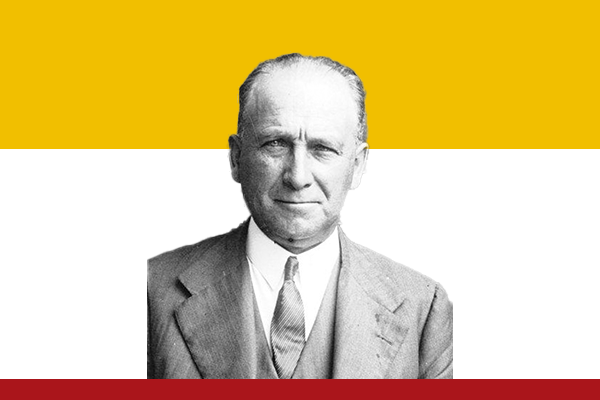
Early Life and Political Beginnings
Francisco Largo Caballero was born in Madrid in 1869. He grew up in a working-class family, which inspired his commitment to labor rights. As a young man, he worked as a plasterer, and his firsthand experience with economic hardship pushed him toward socialist ideals. He joined the Spanish Socialist Workers’ Party (PSOE) and the General Union of Workers (UGT), where he quickly became a prominent leader. His passion for justice and equality motivated him to strengthen the socialist movement and promote labor reforms across Spain.
Rise in the Socialist Movement
Largo Caballero actively organized strikes and demonstrations to demand fair wages and better working conditions. His influence in the UGT and PSOE grew as he spoke out against exploitation and injustice. By the early 20th century, he had become one of Spain’s most recognized labor leaders. During King Alfonso XIII’s reign, he played a crucial role in negotiating labor policies and protecting workers from oppression. His dedication earned him the title of “the Spanish Lenin” among supporters who admired his revolutionary zeal.
Leadership During the Second Republic
When Spain established the Second Republic in 1931, Largo Caballero seized the opportunity to implement his socialist vision. He joined the new government as Minister of Labor and Social Welfare. In that role, he introduced progressive reforms, including an eight-hour workday, social insurance, and workers’ rights protections. His policies improved the lives of thousands of Spanish workers and set the foundation for future social welfare systems.
Largo Caballero also worked to strengthen trade unions and encourage worker participation in governance. His actions made him a symbol of empowerment for the working class. However, his radical reforms worried conservative and military groups, who viewed his socialism as a threat to traditional power structures. Despite opposition, he continued to push for equality and justice with courage and determination.
Prime Minister During the Spanish Civil War
In 1936, as Spain plunged into civil war, Francisco Largo Caballero became Prime Minister. He faced the enormous challenge of uniting Spain’s divided leftist factions and resisting the Nationalist forces led by General Francisco Franco. Caballero reorganized the Republican army, mobilized workers, and strengthened the war effort. He worked tirelessly to maintain morale and defend the ideals of democracy and social reform.
As Prime Minister, he also sought international support to counter the fascist forces, though his efforts met with limited success. Tensions between communists, anarchists, and socialists within his coalition weakened his government. Nevertheless, Largo Caballero’s leadership reflected his unwavering belief that Spain could overcome its divisions and build a fairer, more just society.
Exile and Legacy
After his resignation in 1937, Largo Caballero left Spain following the fall of the Republican government. He lived in exile in France, where Nazi forces later imprisoned him during World War II. Despite imprisonment and suffering, he refused to renounce his socialist principles. After his release, he continued to advocate for workers’ rights until his death in 1946.
Francisco Largo Caballero’s legacy endures as a symbol of resilience and conviction. He transformed Spain’s labor movement and inspired generations of activists to fight for justice and equality. His life demonstrated how a working-class man could rise to lead a nation through one of its darkest chapters, armed only with courage, conviction, and a vision for a better world.
Conclusion
Francisco Largo Caballero actively shaped Spanish history through his leadership, reforms, and defense of workers’ rights. His tenure as Prime Minister during the Spanish Civil War showcased his strength and determination in the face of overwhelming odds. Although his vision of a socialist Spain was never fully realized, his contributions to labor rights and social reform continue to influence Spain’s democratic and social progress today.