Mr. George Grey
In Office: 13 October 1877 – 8 October 1879
Political party: Independent
Home State: Lisbon
Lifespan: 1812–1898
Country: New Zealand
Image credits available here.
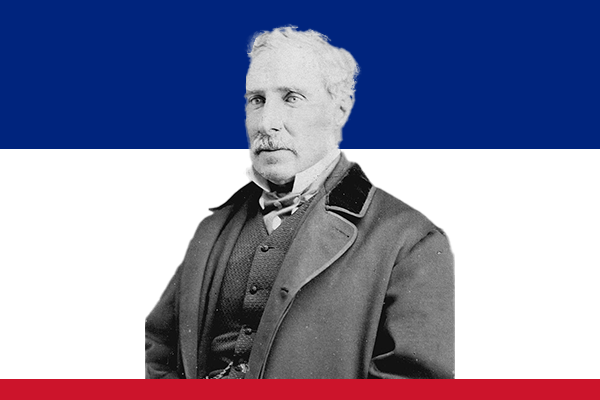
Early Life and Background
George Grey was born on 14 April 1812 in Lisbon, Portugal, into a military family. He grew up in England after his father’s death in battle and pursued a career in the British Army. He trained at the Royal Military College, Sandhurst, where he developed strong leadership skills. His military service exposed him to colonial administration, and he soon transitioned from soldier to statesman.
Arrival in New Zealand
Grey arrived in New Zealand as a young officer in the 1840s. He studied Māori society and languages, which gave him a deeper understanding of indigenous culture. His knowledge helped him rise quickly within the colonial administration. By the mid-1840s, he became Governor of South Australia, and in 1845, the British Government appointed him Governor of New Zealand.
Role as Governor
As Governor, Grey played a crucial role in stabilizing the colony. He confronted conflicts between Māori tribes and European settlers and implemented policies to expand European settlement. He established schools, promoted infrastructure, and encouraged agricultural development. At the same time, he often clashed with Māori leaders by acquiring land through controversial means. His administration expanded the colonial footprint, but it also created tensions that shaped future conflicts.
Transition to Prime Minister
Grey’s political career in New Zealand reached its peak when he became Prime Minister in 1877. He entered Parliament with a reformist agenda and built a reputation as a strong, charismatic leader. As Prime Minister, he pushed forward democratic reforms, advocating for a broader franchise to include more working men in the political process. He also supported land reforms to reduce the dominance of large landowners and to promote fairer access for settlers.
Policies and Reforms
Grey used his office to challenge entrenched interests and push for social equity. He sought to extend voting rights, increase parliamentary representation, and bring more inclusivity to New Zealand politics. He also worked to expand public education and improve economic opportunities for settlers. His focus on land reform aimed to redistribute land more fairly, but wealthy landowners strongly opposed his proposals.
Grey also maintained complex relationships with Māori communities. He promoted some measures to integrate Māori into colonial society, but his policies often failed to respect their autonomy and land rights. His leadership highlighted the difficult balance between settler expansion and indigenous rights.
Leadership Style
Grey led with passion, intelligence, and determination. He spoke eloquently, inspiring both supporters and opponents. His vision for a more democratic and equitable New Zealand earned him a loyal following. However, his confrontational approach created friction within Parliament. His inability to compromise sometimes weakened his government’s stability. Despite these challenges, he left a profound mark on New Zealand’s political landscape.
Later Years and Legacy
Grey served as Prime Minister until 1879. After leaving office, he continued to participate in politics and remained a respected public figure. He later retired to his island estate in Kawau but stayed involved in debates about New Zealand’s future. He died on 19 September 1898 in London, leaving behind a complex legacy.
Historians remember Grey as both a visionary reformer and a controversial colonial leader. He expanded democratic participation, promoted social reform, and laid foundations for modern governance. At the same time, his policies toward Māori communities left a mixed record of progress and dispossession.
Conclusion
George Grey shaped New Zealand’s political history as both Governor and Prime Minister. He expanded democracy, promoted education, and advocated for land reforms. His leadership style and vision influenced generations of New Zealanders. Though controversial, he remains one of the most important figures in New Zealand’s path to nationhood.