Mr. George Hamilton-Gordon
In Office: 19 December 1852 – 30 January 1855
Political Party: Peelite
Home State: Edinburgh
Lifespan: 1784–1860
Country: United Kingdom
Image credits available here.
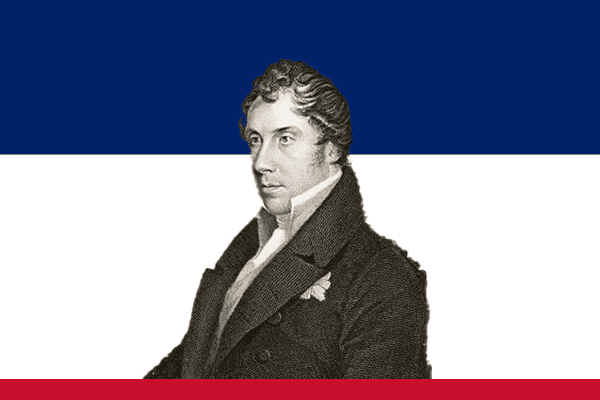
Early Life and Education
George Hamilton-Gordon was born on January 28, 1784, in Edinburgh, Scotland. He belonged to an aristocratic Scottish family with strong political connections. After the death of his parents during his childhood, guardians raised him and ensured that he received a strong education.
He studied at Harrow School and later attended St John’s College, Cambridge. During his youth, he traveled across Europe. These travels allowed him to learn foreign languages and understand European politics and culture. This early exposure shaped his interest in diplomacy and international relations.
Entry into Politics
George Hamilton-Gordon entered politics in 1801 when he inherited the title of Earl of Aberdeen and gained a seat in the House of Lords. From the beginning, he focused on foreign affairs and diplomacy. His calm personality and thoughtful approach helped him gain respect among political leaders.
In 1813, he began his diplomatic career when the British government sent him on a special mission to Austria. During the Napoleonic Wars, he worked closely with European leaders and helped strengthen alliances against Napoleon. His diplomatic work built his reputation as a skilled negotiator.
Career Before Becoming Prime Minister
Before becoming Prime Minister, Aberdeen served in several important government positions. In 1828 he became Chancellor of the Duchy of Lancaster, and later he served as Foreign Secretary from 1828 to 1830 under Prime Minister the Duke of Wellington.
He again served as Foreign Secretary from 1841 to 1846 in the government of Sir Robert Peel. During this period, he improved relations between Britain and France and resolved several international disputes peacefully. Many historians consider this phase one of the most successful parts of his political career.
Premiership (1852–1855)
In December 1852, George Hamilton-Gordon became Prime Minister. He led a coalition government that included members of different political groups such as the Peelite Conservatives and the Whigs. Managing such a coalition required careful negotiation and compromise, and Aberdeen worked hard to maintain unity within the government.
However, his government soon faced a major international crisis. Tensions between the Ottoman Empire and Russia escalated, which eventually led to the Crimean War in 1853. Britain and France joined the conflict to support the Ottoman Empire against Russia.
Aberdeen personally preferred diplomacy and peace, but political pressure and strategic concerns pushed Britain into war. Many critics later blamed his government for poor preparation and weak leadership during the early stages of the war.
Resignation and Later Life
Public criticism of the government’s handling of the Crimean War increased in Britain. Parliament launched an investigation into the war effort, and the political pressure weakened Aberdeen’s coalition government.
In January 1855, George Hamilton-Gordon resigned as Prime Minister. Lord Palmerston succeeded him and continued the war effort.
After leaving office, Aberdeen gradually withdrew from active politics. He spent much of his remaining life managing his estates and participating occasionally in public affairs.
Legacy
George Hamilton-Gordon died on December 14, 1860. Although his premiership ended during a difficult period, historians often view him as an intelligent and principled statesman. He supported peaceful diplomacy, international cooperation, and moderate political reform.