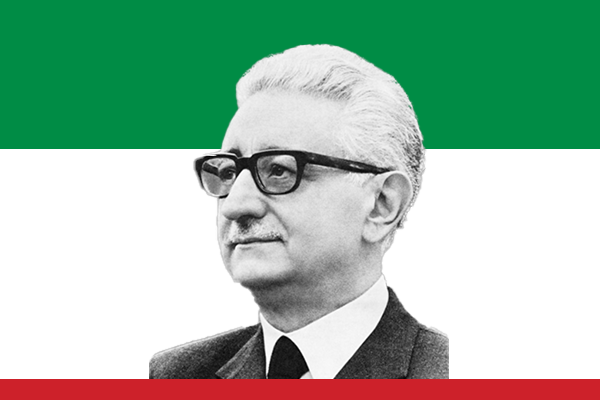
Early Life and Academic Career
Giovanni Leone was born on November 3, 1908, in Naples, Italy. From an early age, he displayed a deep interest in law and public service. He pursued a degree in law from the University of Naples Federico II, where he graduated with distinction. Leone began teaching criminal law at several Italian universities, sharing his legal insights and inspiring a generation of students.
He wrote influential legal texts that contributed to Italian jurisprudence, earning national recognition as one of Italy’s most respected scholars in constitutional and criminal law. His intellectual foundation later guided his approach to governance and policymaking.
Political Rise and Entry into Parliament
Leone entered politics after World War II, joining the Christian Democracy (Democrazia Cristiana) party. In 1948, he was elected to the Chamber of Deputies, where he actively participated in legislative debates and reforms. His legal background helped him draft crucial laws that supported Italy’s transition from fascism to democracy.
Leone gained a reputation for fairness, moderation, and strong constitutional knowledge. His colleagues respected his ability to mediate political disputes and maintain stability during turbulent parliamentary sessions. His calm, pragmatic leadership made him a trusted figure within the Christian Democratic Party.
First Term as Prime Minister
Giovanni Leone first became Prime Minister in 1963, serving as a caretaker leader during a period of political transition. Although his first term was short, he managed to maintain parliamentary balance and protect Italy’s political institutions. His leadership emphasized unity and administrative efficiency, earning respect across party lines.
Second Term and Major Achievements
Leone returned as Prime Minister in 1968, leading Italy during a period of social unrest and economic transformation. He implemented economic stabilization measures and promoted modernization of public institutions. He actively worked to balance the interests of labor unions, businesses, and government agencies.
His administration dealt with student protests, labor strikes, and growing political polarization. Leone emphasized dialogue and compromise, believing that democracy could thrive only through mutual understanding. He also supported Italy’s continued participation in European cooperation efforts, recognizing the importance of unity within Europe’s developing framework.
Presidency and Later Years
After serving as Prime Minister, Leone became President of Italy in 1971. He held the presidency until 1978, guiding the nation through political challenges and terrorist threats during the so-called “Years of Lead.” Leone actively defended the Italian Constitution and worked tirelessly to preserve democracy.
He eventually resigned amid political controversy, though he maintained his innocence and defended his record. Over time, historians reevaluated his presidency more favorably, recognizing his restraint and respect for democratic processes during turbulent times.
Legacy and Contributions
Giovanni Leone’s influence extended beyond his political offices. He helped shape Italy’s constitutional thinking and inspired generations of jurists and politicians. His writings continue to serve as foundational texts in Italian legal education.
Leone’s legacy endures as one of balance, integrity, and intellectual rigor. He demonstrated that strong democratic institutions rely on both moral conviction and adherence to law. His career embodied a blend of scholarship and statesmanship that strengthened Italy’s modern identity.
Conclusion
Prime Minister Giovanni Leone combined the insight of a jurist with the vision of a statesman. Through his leadership, he safeguarded Italy’s democratic values during uncertain times. His lifelong devotion to law, governance, and education ensured his place among Italy’s most respected public figures. Leone’s name remains synonymous with integrity, intellect, and commitment to public service.