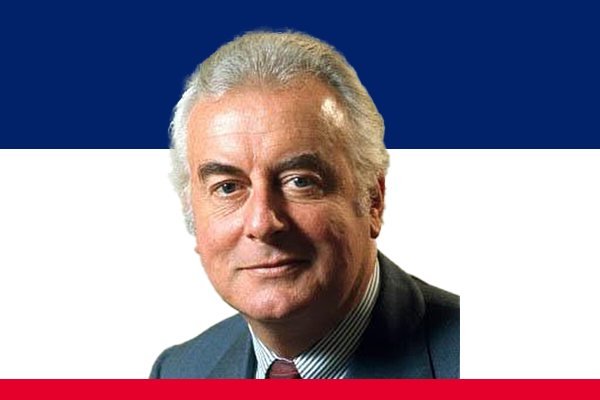
Early Life and Political Career
Whitlam was born on July 11, 1916, in Kew, Victoria. He grew up in a family that valued education and public service. Whitlam pursued law at the University of Sydney, where he demonstrated remarkable intellectual curiosity and leadership skills. After completing his education, he worked as a barrister and became actively involved in politics. He joined the Australian Labor Party (ALP) and steadily rose through its ranks, earning a reputation as a committed and articulate advocate for progressive policies.
Whitlam entered the House of Representatives in 1952, representing the electorate of Werriwa. Over the next two decades, he built a reputation for his sharp debating skills and his unwavering dedication to social reform. In 1967, he became the leader of the ALP, positioning himself as the key figure to lead the party to victory in the next federal election.
Election Victory and Ambitious Reforms
In December 1972, Whitlam led the ALP to a historic victory, ending 23 years of conservative government. Upon taking office, he and his government immediately implemented a bold agenda aimed at transforming Australian society. Whitlam prioritized education, healthcare, and social welfare, recognizing that these sectors required urgent reform.
Whitlam abolished university tuition fees, allowing thousands of young Australians to pursue higher education. He also established Medibank, the precursor to Australia’s universal healthcare system, ensuring that all citizens could access medical care regardless of income. In addition, his government expanded social security programs and introduced initiatives to support women, Indigenous Australians, and marginalized communities.
Foreign Policy and International Impact
Whitlam also reshaped Australia’s foreign policy. He recognized the importance of engaging with Asia and withdrew Australian troops from Vietnam, ending Australia’s involvement in the unpopular war. Whitlam established diplomatic relations with the People’s Republic of China, becoming one of the first Western leaders to do so. These actions not only enhanced Australia’s international standing but also reflected Whitlam’s forward-thinking approach to global diplomacy.
Challenges and Controversy
Despite his achievements, Whitlam’s government faced significant political challenges. His ambitious reforms often encountered resistance from conservative politicians, bureaucrats, and sections of the media. Controversial decisions, such as the appointment of certain public officials, fueled intense political debates. By 1975, tensions between the government and the Governor-General, Sir John Kerr, reached a climax.
On November 11, 1975, Governor-General Kerr dismissed Whitlam from office, citing a constitutional crisis. The dismissal shocked Australia and sparked widespread public debate about the limits of executive power. Whitlam’s supporters viewed the event as a profound injustice, while critics argued it reflected necessary constitutional intervention.
Legacy and Lasting Influence
Gough Whitlam’s legacy endures through the transformative policies he implemented and the progressive vision he championed. His reforms in education, healthcare, and social welfare laid the foundation for a more equitable Australian society. Whitlam’s foreign policy initiatives demonstrated the importance of independent, forward-looking leadership on the global stage.
Whitlam passed away on October 21, 2014, but Australians continue to celebrate his achievements and remember his courage in pursuing bold reforms. His tenure, though marked by controversy, fundamentally changed the way Australians think about government, equality, and national identity.