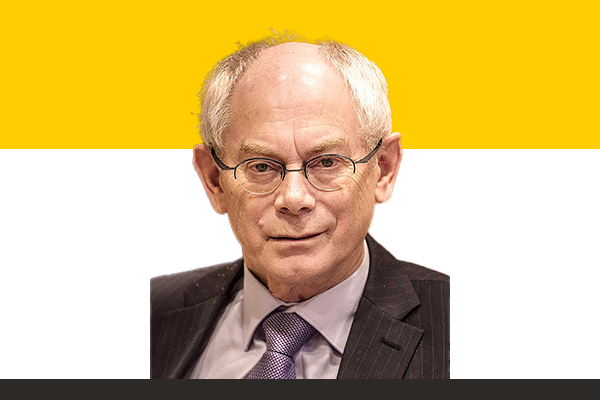
Early Life and Intellectual Foundations
Herman Van Rompuy grew up in Belgium with a strong interest in philosophy, economics, and public affairs. He pursued education with determination and developed a disciplined, analytical mind. He explored complex ideas at university and shaped a worldview grounded in stability, social responsibility, and quiet strength. His early career in banking and academia gave him practical experience with economic issues. As he moved toward public life, he relied on these intellectual foundations to build a reputation for calm, thoughtful decision-making.
Entry into Belgian Politics
Van Rompuy entered politics with a clear intention to strengthen Belgium’s democratic institutions. He joined the Christian Democratic and Flemish (CD&V) party and quickly gained influence through his composed leadership style. He took on internal party challenges, built consensus among diverse voices, and earned trust for his reliability. As he progressed, he served in various government roles, including Secretary of State for Finance and President of the CD&V. Each role allowed him to refine his skills in negotiation, economic policy, and political reconciliation.
Rise to National Leadership
Belgium faced political fragmentation and economic uncertainty when Van Rompuy’s profile rose further. Parliament recognized his ability to calm tensions, and party leaders often approached him to mediate disputes. He accepted these tasks with quiet efficiency and resolved issues that many considered nearly impossible. His reputation as a stabilizer grew, and national figures increasingly relied on him during periods of discord. This rising confidence paved the way for his appointment as Prime Minister in December 2008.
Prime Ministerial Leadership
As Prime Minister, Van Rompuy approached governance with restraint, discipline, and strategic clarity. He encouraged cooperation among coalition partners and strengthened communication between regional and federal institutions. He directly confronted Belgium’s economic challenges during the global financial crisis. Instead of allowing instability to spread, he introduced measures that protected the Belgian banking system and restored public confidence. His government controlled spending, promoted responsible budgeting, and supported recovery efforts without creating unnecessary political friction.
Van Rompuy also emphasized social cohesion. He addressed cultural and linguistic tensions with patience and diplomacy, ensuring that disagreements did not escalate into national crises. He regularly engaged with all major parties and encouraged them to place national interest above partisan competition. Through this approach, he earned broad respect even from political rivals.
European Influence and Consensus Building
Van Rompuy’s competent leadership quickly attracted attention beyond Belgium. European Union leaders observed how he managed domestic difficulties and stabilized the Belgian government during turbulent times. They valued his calm, discreet, and constructive style. When the EU needed its first permanent President of the European Council, leaders turned to him. His selection reflected their trust in his ability to maintain unity among member states.
Before leaving office, he used his remaining time as Belgian Prime Minister to secure smooth transitions and reinforce economic stability. His approach demonstrated that politics can achieve results through quiet persistence rather than dramatic confrontation.
Legacy of Herman Van Rompuy
Herman Van Rompuy’s legacy rests on his ability to lead without noise. He believed in consensus, moderation, and long-term stability. He handled financial crisis pressures, political fractures, and institutional challenges with poise. Belgium benefited from his calm leadership during a period when many nations struggled with turbulence. His later European leadership further confirmed his reputation as a reliable crisis manager.