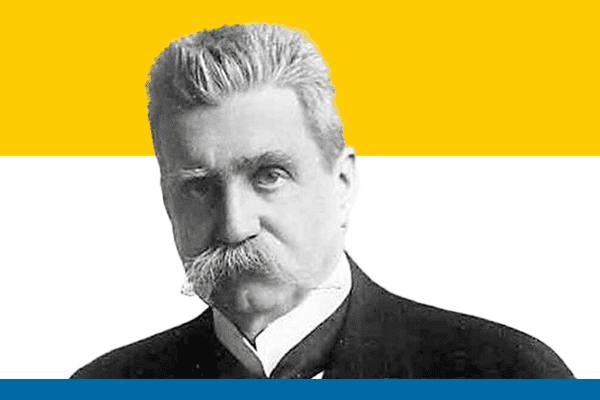
Early Life and Education
Hjalmar Branting was born on November 23, 1860, in Stockholm, Sweden. He grew up in an educated and politically aware family, which influenced his early interest in public affairs. He studied at Uppsala University, where he focused on mathematics and astronomy. However, instead of pursuing a scientific career, he chose journalism and politics as his primary path.
Branting began his career as a journalist, writing for liberal newspapers. Through his writing, he openly criticized social inequality and advocated for workers’ rights. His active involvement in public debate helped him gain recognition as a strong voice for reform.
Political Career and Leadership
Branting became a founding member of the Swedish Social Democratic Party in 1889. He actively worked to expand the party’s influence and promoted democratic reforms. Unlike many revolutionaries of his time, he supported gradual change through parliamentary methods rather than violent revolution.
He entered the Swedish Parliament in 1896, where he consistently advocated for universal suffrage, labor rights, and social justice. His leadership helped transform the Social Democratic Party into a major political force in Sweden.
Branting served as Prime Minister of Sweden three times: first in 1920, then from 1921 to 1923, and briefly again in 1924–1925. During his leadership, he actively promoted policies that strengthened democracy and improved living conditions for ordinary citizens.
Contributions to Democracy and Social Reform
Hjalmar Branting played a crucial role in establishing universal suffrage in Sweden. He actively supported the extension of voting rights to all adult citizens, including women. His efforts contributed significantly to Sweden becoming a fully democratic nation.
He also promoted social reforms such as improved working conditions, social security measures, and education. Rather than imposing abrupt changes, he worked steadily within the political system to achieve lasting progress.
Branting’s leadership style emphasized cooperation and dialogue. He built alliances with other political groups, which helped pass important legislation and maintain political stability.
International Role and Peace Efforts
Branting extended his influence beyond Sweden by actively supporting international peace efforts. He participated in the League of Nations and promoted diplomatic solutions to global conflicts. His commitment to peace earned him international recognition.
In 1921, Branting received the Nobel Peace Prize for his contributions to international cooperation and conflict resolution. He shared the award with Norwegian statesman Christian Lous Lange. This achievement highlighted his dedication to peaceful diplomacy and global stability.
Personal Life and Character
Hjalmar Branting was known for his integrity, intelligence, and dedication to public service. He maintained a disciplined and thoughtful approach to leadership. His calm and rational style earned him respect among both supporters and opponents.
Despite facing political challenges and opposition, he remained committed to his ideals. He actively worked to bridge divides and promote unity within Swedish society.
Legacy and Significance
Hjalmar Branting left a lasting impact on Sweden’s political landscape. He helped establish democratic governance and laid the foundation for the country’s welfare system. His efforts strengthened the role of the Social Democratic Party, which continues to influence Swedish politics today.
His commitment to peaceful reform and international cooperation set an example for future leaders. He demonstrated that strong leadership and progressive change can coexist with stability and democracy.
Conclusion
Hjalmar Branting played a vital role in shaping modern Sweden. Through active leadership, he advanced democracy, social justice, and international peace. His legacy continues to inspire political leaders and citizens around the world.