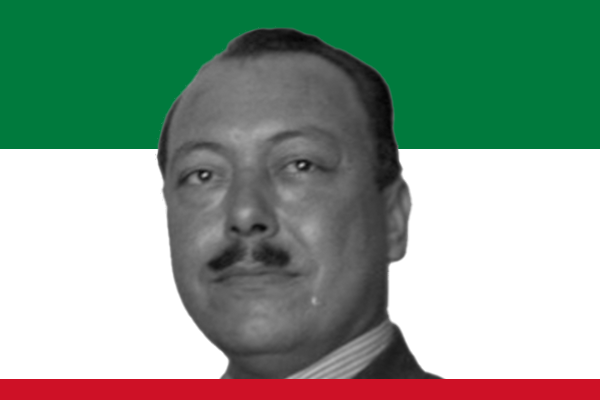
Husayn al‑Khalidi (Husayn Fakhri al‑Khalidi; 17 January 1895 – 6 February 1962) was a prominent Palestinian‑Jordanian political figure known for his roles in municipal leadership, nationalist activism, and high office in the Hashemite Kingdom of Jordan. Born in Jerusalem during the final decades of the Ottoman Empire, al‑Khalidi came from an influential Jerusalem family with deep roots in public service and scholarship. He was educated in medicine at the American University of Beirut, graduating as a physician before entering political and nationalist affairs.
Al‑Khalidi’s early career blended professional service and budding nationalism. During World War I, he served as a doctor in the Ottoman Army, where he was wounded multiple times. After the war, he practiced medicine and held administrative posts in public health in the region as Ottoman influence waned and new governance structures emerged. He also became associated with Arab nationalist circles that sought greater autonomy and resistance to colonial control.
In the 1930s, al‑Khalidi’s political influence expanded when he was elected Mayor of Jerusalem in 1935. His tenure occurred at a turbulent moment in Palestinian politics, marked by rising tensions between Arab communities, Jewish immigration under the British Mandate, and intensifying anti‑colonial sentiment. As mayor, al‑Khalidi was the last elected leader of undivided Jerusalem before his removal by the British authorities in 1937 due to his political activities. He was subsequently deported to the Seychelles Islands along with other nationalist leaders for his association with the Arab Higher Committee, which coordinated resistance efforts to British policies and Zionist immigration.
While in exile, al‑Khalidi continued to advocate for Palestinian rights. He was among delegates in the London Conference of 1939 that debated the future of Palestine, where he opposed the British White Paper limiting Arab political aspirations. After returning to the region in the early 1940s, he remained active within nationalist frameworks, serving in the Arab Higher Committee and later participating in the All‑Palestine Government established in Gaza in 1948.
Following the Arab–Israeli War of 1948 and the annexation of the West Bank by Jordan, al‑Khalidi’s political career shifted to Jordanian government service. He was appointed to the Senate and served in key cabinet roles, including twice as Minister of Foreign Affairs in the 1950s. His tenure reflected Jordan’s diplomatic challenges during the volatile Cold War era and regional dynamics involving Arab nationalism, Western influence, and internal governance reforms.
The pinnacle of al‑Khalidi’s political career came in April 1957 when King Hussein of Jordan appointed him the 13th Prime Minister of Jordan. His government was part of efforts to stabilize the country amid regional tensions, including protests and military unrest relating to competing ideologies within Jordan and pressure from both pan‑Arab nationalist and pro‑Western factions. However, his administration was short‑lived — lasting just over a week — as internal conflicts and political pressures led to his replacement by Ibrahim Hashem.
After stepping down as prime minister, al‑Khalidi remained active in public life, though he did not return to high ministerial office. He retired to Jericho, contributing to public discourse through writing and commentary, including an unfinished autobiography and analysis of the Arab experience in the mid‑20th century. He died in Amman, Jordan in 1962.
Al‑Khalidi’s legacy lies in his multifaceted career: as a mayor navigating the complexities of Jerusalem during the Mandate, a national leader resisting colonial policy, and a statesman within Jordan’s evolving political landscape. His life reflects the broader narrative of Arab political struggles in the first half of the 20th century, spanning empire dissolution, nationalist movements, and state‑building efforts in the Middle East.