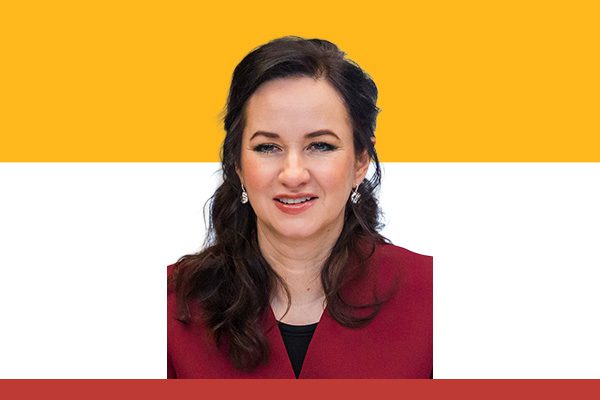
Early Life and Education
Inga Ruginienė was born on 24 May 1981 in Trakai, Lithuania. She spent much of her childhood in Grigiškės and developed an interest in social issues from an early age. Her family background influenced her understanding of the challenges faced by ordinary working people. She also spent part of her childhood in Kramatorsk, Ukraine, where some of her relatives lived.
She pursued higher education with determination and earned a Master’s degree in Public Health from Vilnius University. Later, she obtained a Master’s degree in Labour Law from Mykolas Romeris University. She also completed studies in forest management, giving her a diverse academic background that supported her future leadership roles.
Career in Trade Unions
Before entering politics, Ruginienė established herself as a respected trade union leader. She worked actively to improve labor conditions, fair wages, and employee protections. In 2018, she became President of the Lithuania Trade Union Confederation, one of the country’s most influential labor organizations.
During her leadership, she advocated for stronger social protections and promoted dialogue between workers, employers, and government institutions. Her efforts helped strengthen the role of trade unions in Lithuania. She also served as Vice President of the European Trade Union Confederation, expanding her influence beyond national borders.
Entry into Politics
Ruginienė entered active politics in 2024 when she joined the Lithuanian Social Democratic Party. In the same year, she was elected to the Lithuanian Parliament, known as the Seimas. Her experience in labor relations and social policy made her a valuable addition to the government.
Soon after entering parliament, she was appointed Minister of Social Security and Labour. In this role, she focused on employment policies, social assistance programs, and support for vulnerable groups. Her practical approach and communication skills earned her respect among colleagues and citizens.
Prime Minister of Lithuania
In 2025, following political changes within the government, Ruginienė was nominated for the position of Prime Minister by President Gitanas Nausėda. The Seimas approved her appointment, making her the 19th Prime Minister of Lithuania.
As Prime Minister, she emphasized stability, cooperation, and effective governance. She pledged to strengthen social welfare programs, support economic growth, and maintain Lithuania’s commitment to European and transatlantic partnerships. Her leadership style is often described as constructive and consensus-oriented.
Personal Life and Legacy
Beyond politics, Ruginienė has participated in volunteer activities, including service with the Lithuanian Red Cross. She is married and has two children. She speaks Lithuanian, English, and Russian fluently and enjoys reading, traveling, and painting.
Conclusion
Inga Ruginienė’s journey from trade union activism to the office of Prime Minister reflects her dedication to public service and social justice. Through her work in labor organizations, parliament, and government, she has become one of Lithuania’s most prominent contemporary leaders. Her focus on workers’ rights, social welfare, and national stability continues to shape her contribution to Lithuania’s political development.