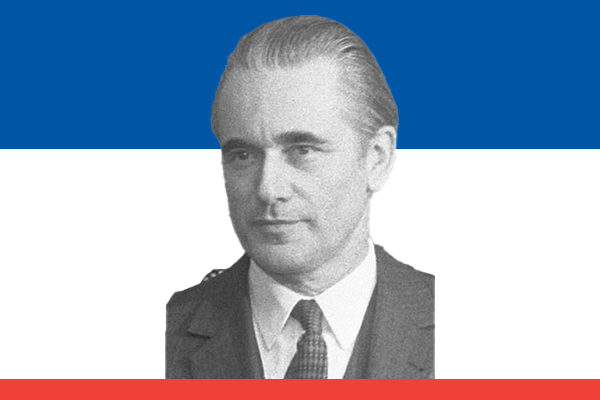
Early Life and Career
Jacques Chaban-Delmas was born on March 7, 1915, in Paris, France. He pursued law and political science, which helped him build a strong foundation for his political career. During World War II, Delmas joined the French Resistance and actively fought against the Nazi occupation. His courage and dedication earned him recognition as one of the youngest generals in the French army.
After the war, Chaban-Delmas entered politics and joined the Gaullist movement. He became a member of parliament in 1946 and later served in different ministerial roles. His commitment to public service and his dynamic leadership style helped him rise in French politics.
Becoming Prime Minister
In 1969, President Georges Pompidou appointed Chaban-Delmas as Prime Minister. He accepted the challenge at a crucial moment when France needed reforms and modernization. He announced his famous program called the “New Society,” which aimed to modernize the economy, reduce inequality, and strengthen social justice.
Chaban-Delmas promoted innovation, expanded education, and encouraged cultural development. He wanted France to embrace progress while maintaining its democratic values. His government pushed forward reforms that supported workers, students, and the middle class.
The “New Society” Program
As Prime Minister, Chaban-Delmas actively promoted the idea of building a fairer society. His “New Society” program focused on modernizing industry, improving working conditions, and expanding access to education. He encouraged dialogue between employers and employees, believing cooperation could create social harmony.
He also prioritized economic development. His government supported investment, encouraged technology, and promoted modernization in different sectors. Chaban-Delmas insisted on reducing the gap between social classes, and he worked to expand healthcare and social security.
Challenges in Office
Despite his ambitious vision, Chaban-Delmas faced strong opposition. Many Gaullists resisted his reforms because they feared change would weaken traditional structures. Others accused him of being too progressive, while some critics claimed his policies lacked practicality.
President Pompidou often disagreed with him, and their strained relationship weakened his political influence. In 1972, Chaban-Delmas resigned as Prime Minister after losing the president’s full support. His departure ended the short but impactful “New Society” experiment.
Later Political Career
After stepping down, Chaban-Delmas did not leave politics. He continued serving as the Mayor of Bordeaux, a position he had held since 1947. Delmas transformed the city into a modern and vibrant urban center, earning respect as a long-serving and effective local leader.
He also ran for the French presidency in 1974 but lost to Valéry Giscard d’Estaing. Despite this defeat, he remained an influential figure in French politics for decades.
Legacy of Jacques Chaban-Delmas
Chaban-Delmas left behind a remarkable legacy. His ideas about modernization, social reform, and economic progress influenced future French leaders. eH showed that France could balance tradition with innovation. Delmas leadership in the Resistance, his long service as Mayor of Bordeaux, and his ambitious reforms as Prime Minister all shaped his image as a visionary leader.
He passed away on November 10, 2000, but the French people continue to remember his contributions. His life symbolized courage, dedication, and a deep commitment to building a better society.
Conclusion
Jacques Chaban-Delmas played a vital role in shaping modern France. As Prime Minister, he championed the “New Society,” encouraged modernization, and promoted fairness in society. Although his reforms faced opposition, his vision inspired future generations. His legacy as a war hero, Prime Minister, and long-time mayor demonstrates his unwavering devotion to France.