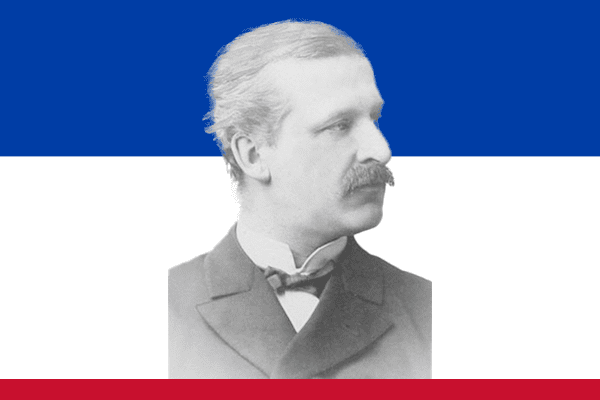
Mr. Joan Röell
In Office: 9 May 1894 – 27 July 1897
Political Party: Independent Liberal
Home State: Nijmegen
Lifespan: 1844–1914
Country: Netherland
Image credits available here.
Early Life and Career
Joan Röell was born in Catalonia in 1829. From an early age, he showed strong academic ability, particularly in law and economics. He pursued higher education and later established himself as a lawyer and economist. His intellectual pursuits led him to participate actively in political debates and reforms.
He entered public service and gradually rose through political ranks. Röell gained recognition for his analytical thinking and administrative competence. He aligned himself with moderate liberal ideologies, which influenced his approach to governance.
Political Rise
Röell built his political career during a period when Spain experienced frequent governmental changes. Leaders often struggled to maintain stability, and political factions competed for power. Röell worked within these shifting dynamics and earned trust among influential circles.
He held several important positions before becoming Prime Minister. His expertise in finance and governance helped him manage complex administrative challenges. He became known for promoting economic discipline and institutional order.
Tenure as Prime Minister
In 1874, Joan Röell assumed the office of Prime Minister. Political uncertainty dominated Spain at that time, and rapid changes in leadership occurred. Röell took charge during the final phase of the First Spanish Republic.
He attempted to restore order and strengthen administrative control. His government addressed economic issues and worked to stabilize public institutions. Röell made efforts to ensure that governance remained functional despite ongoing conflicts.
Although his tenure remained short, he actively responded to the crisis rather than passively observing events. He implemented policies and guided administrative decisions with a sense of urgency. His leadership helped maintain continuity in governance during a turbulent transition.
Challenges and Contributions
Röell faced significant challenges during his leadership. Political divisions weakened the central authority, and instability affected governance. However, he approached these difficulties with practical solutions.
He contributed to financial reforms and emphasized responsible economic management. His work influenced later administrative practices. Röell’s ideas reflected a commitment to modernization and efficiency.
Instead of allowing instability to dominate, he worked actively to preserve institutional integrity. His contributions demonstrated his dedication to public service.
Later Life and Legacy
After his tenure, Röell continued to contribute intellectually and politically. He remained engaged in discussions on economic policy and governance. His influence extended beyond his time in office.
He passed away in 1902, leaving behind a legacy of thoughtful leadership and reform-oriented governance. Historians recognize him as a capable administrator who acted decisively during a critical period in Spanish history.
Although his time as Prime Minister was brief, Joan Röell played an important role in maintaining governmental continuity. His work reflected a proactive approach to leadership during instability.
Conclusion
Joan Röell stands out as a significant yet often overlooked figure in Spanish political history. He led actively during a time of crisis and contributed to the stabilization of governance. His emphasis on economic discipline and administrative efficiency continues to be appreciated by historians. Röell’s legacy highlights the importance of decisive leadership in challenging times.