Mr. Johan Rudolph Thorbecke
In Office: 4 January 1871 – 4 June 1872
1 February 1862 – 10 February 1866, 1 November 1849 – 19 April 1853
Political Party: Independent Liberal
Home State: Zwolle
Lifespan: 1798–1872
Country: Netherland
Image credits available here.
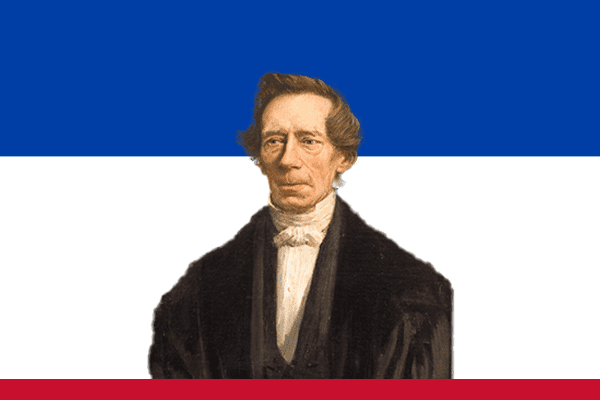
Early Life and Education
Johan Rudolph Thorbecke was born on January 14, 1798, in Zwolle, a city in the Netherlands. He came from a German Lutheran family and showed academic talent from a young age. He studied literature, history, and law at Leiden University, where he developed a deep interest in political philosophy and government. Thorbecke later worked as a professor and writer. His scholarly background gave him a strong understanding of European political systems and constitutional ideas. Before entering national politics, he built a reputation as an intellectual who believed in reform, rational administration, and civil liberties.
Rise in Politics
Thorbecke entered politics during a time when many Europeans demanded constitutional reform and greater public representation. In the Netherlands, King William II ruled with significant authority, but political pressure increased during the revolutions of 1848 across Europe. Thorbecke emerged as the leading reform-minded statesman of the period. He led the commission that drafted the Dutch Constitution of 1848, one of the most important documents in the country’s history. This constitution reduced royal power and gave more authority to ministers and parliament. It also introduced ministerial responsibility, which meant ministers became accountable to elected representatives rather than to the monarch alone.
Terms as Prime Minister
Thorbecke served as Prime Minister of the Netherlands three times: from 1849 to 1853, from 1862 to 1866, and from 1871 until his death in 1872. During these terms, he pursued liberal reforms in administration, infrastructure, education, and local government. He supported the modernization of the state and worked to make public institutions more efficient and transparent. Thorbecke encouraged the expansion of railways, improved governance in municipalities and provinces, and promoted legal reforms that strengthened the rule of law. He also believed that government should serve the nation through reasoned policy rather than personal royal influence or aristocratic privilege.
Political Ideas and Legacy
Thorbecke strongly believed in constitutional liberalism. He wanted a government based on laws, representative institutions, and individual freedoms. His political philosophy emphasized balance: the monarchy should remain, but elected institutions should guide national policy. This approach helped the Netherlands avoid the instability that affected many other European countries in the nineteenth century. Thorbecke’s reforms laid the foundation for the modern Dutch parliamentary system. Even after his death, later leaders continued to build on the framework he created. Historians widely regard him as the architect of Dutch democracy and one of the greatest statesmen in the history of the Netherlands.
Conclusion
Johan Rudolph Thorbecke transformed Dutch politics through vision, scholarship, and reform. As Prime Minister, he led the Netherlands into a new constitutional era and reduced the concentration of royal power. His 1848 constitution changed the relationship between the monarchy, ministers, and parliament, creating a more democratic and accountable government. Thorbecke’s legacy remains deeply rooted in Dutch political life. He is remembered not only as a Prime Minister but also as the founding architect of the modern constitutional system of the Netherlands.