Mr. John Lionel Kotelawala
In Office: 12 October 1953 – 12 April 1956
Political Party: United National Party
Home State: Ceylon
Lifespan: 1897–1980
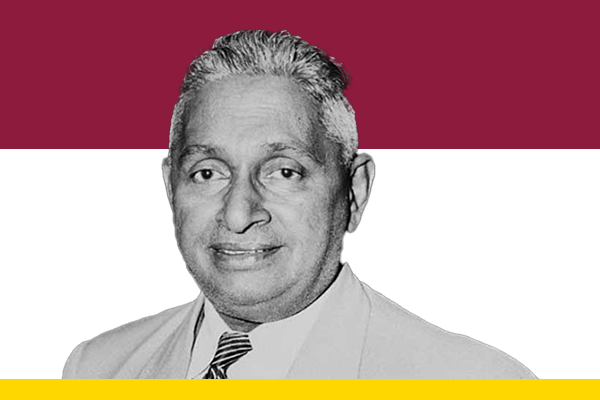
Early Life and Education
Sir John Lionel Kotelawala was born on April 4, 1897, in Colombo, British Ceylon, into a wealthy and influential family. His father, John Kotelawala Sr., worked as a police inspector and businessman, while his mother, Alice Attygalle, came from a prominent and affluent family. After his father’s suicide, the family faced hardships, but Alice managed the estate wisely and secured her son’s future. John studied at Royal College, Colombo, where he received a strong education. He then went to Christ’s College, Cambridge, to study agriculture. While in England, he also received military training, which later influenced his contributions to the Ceylon Defence Force.
Entry into Politics and Ministerial Roles
Kotelawala entered politics in the 1930s by winning a seat on the State Council. As a confident speaker and a supporter of conservative, pro-Western policies, he quickly gained prominence in the United National Party (UNP). He served as Minister of Communications and Works, where he actively improved infrastructure, building roads and expanding the railway system. His military training helped him serve as a commanding officer in the Ceylon Defence Force, enhancing his reputation as a patriotic figure.
Prime Ministership (1953–1956)
In 1953, after Dudley Senanayake resigned, Sir John Kotelawala took office as the third Prime Minister of Ceylon. His government faced immediate challenges, including the public unrest caused by the 1953 Hartal, sparked by the removal of rice subsidies. Though he tried to maintain the UNP’s development agenda, he failed to reconnect with the common people and lost much of their support.
He shaped foreign policy with a strong pro-Western stance and maintained close ties with Britain. At the 1955 Bandung Conference in Indonesia, he openly criticized communism, drawing international attention. However, his blunt remarks offended some non-aligned leaders and revealed a lack of diplomatic subtlety.
Election Defeat and Retirement
In the 1956 general elections, Kotelawala led the UNP but lost decisively to S. W. R. D. Bandaranaike’s Sri Lanka Freedom Party. The election marked a major shift toward nationalism and socialist policies. After the defeat, Kotelawala retired from active politics and stepped away from public affairs.
Later Years and Legacy
Despite his withdrawal from politics, Kotelawala continued to serve the nation. He donated his private estate, Kandawala, to the government, which converted it into a military academy. This institution later became the General Sir John Kotelawala Defence University, one of the country’s premier defense universities. The British government knighted him in 1953 for his national service.
Sir John Kotelawala passed away on October 2, 1980. People remember him as an outspoken, colorful leader who supported the military and helped shape early post-independence Sri Lanka. His legacy endures through the institutions he helped establish and his contributions to national defense and governance.