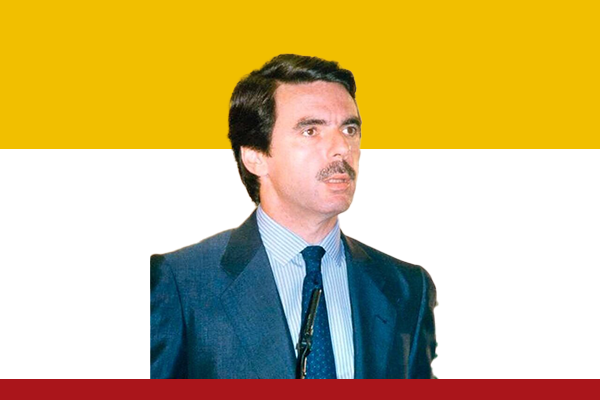
Early Life and Political Rise
José María Aznar López was born on February 25, 1953, in Madrid, Spain. He developed a deep interest in politics and economics during his early years. After earning a law degree from the Complutense University of Madrid, he joined the civil service and worked as a tax inspector. His exposure to public administration inspired him to enter politics.
Aznar joined the conservative political party Alianza Popular, which later became the Partido Popular (PP). Through hard work and determination, he rose through the party ranks. In 1987, he became the President of the Junta of Castile and León, where he focused on economic reforms and regional development. His effective governance increased his national visibility, paving the way for his leadership at the national level.
Becoming Prime Minister
In 1996, Aznar led the Partido Popular to victory in the general elections. As Prime Minister, he inherited a Spain that faced high unemployment and economic instability. Determined to transform the nation, he immediately initiated economic reforms to promote growth and reduce the budget deficit. He encouraged privatization of state-owned industries and implemented strict fiscal policies to stabilize public finances.
Under Aznar’s leadership, Spain’s economy experienced a significant turnaround. Inflation dropped, foreign investments increased, and job creation accelerated. His administration promoted business-friendly policies that boosted competitiveness and modernization across multiple sectors.
Economic and Social Reforms
Aznar emphasized efficiency and accountability in government. He reduced public spending and streamlined bureaucracy. His government encouraged entrepreneurship and foreign trade. By focusing on innovation and infrastructure, he helped modernize Spain’s economy and align it more closely with the European Union’s goals.
He supported Spain’s integration into the European Monetary Union, making the euro the country’s official currency. This decision strengthened Spain’s position within Europe and increased investor confidence.
On the social front, Aznar prioritized education and infrastructure. He expanded access to higher education and improved transport networks. He promoted policies that enhanced Spain’s image as a modern and competitive European nation.
Foreign Policy and International Relations
Aznar pursued a foreign policy that aligned Spain more closely with the United States and NATO. He strengthened Spain’s role in international affairs, supporting global cooperation on security and defense. His close relationship with U.S. President George W. Bush became especially visible during the Iraq War.
Spain’s involvement in the 2003 Iraq War, however, sparked domestic controversy. Many citizens opposed sending Spanish troops, and public protests challenged his foreign policy decisions. Despite the criticism, Aznar remained firm, emphasizing Spain’s commitment to fighting global terrorism.
Later Years and Legacy
In 2004, Aznar stepped down from office, honoring his promise not to seek a third term. His leadership left a lasting mark on Spain’s political and economic landscape. He transformed Spain from a struggling economy into one of Europe’s fastest-growing nations.
Even after leaving office, Aznar remained an influential voice in global politics. He engaged in academic and advisory roles, writing books and giving lectures about international relations and governance.
Aznar’s leadership style reflected discipline, determination, and strong convictions. He is remembered for his economic reforms, pro-European stance, and his firm approach to foreign policy.
Conclusion
Prime Minister José María Aznar’s tenure marked a turning point in Spain’s modern history. Through bold reforms and unwavering commitment, he guided the nation toward stability, prosperity, and greater global influence. His leadership continues to shape discussions about Spain’s role in Europe and the world.