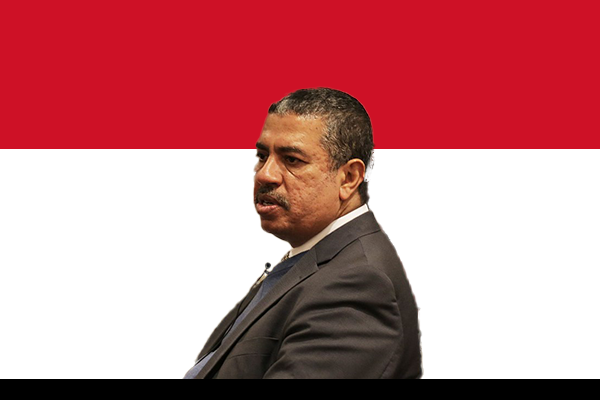
Early Life and Educational Background
Khaled Mahfoudh Bahah was born in Yemen and developed an early interest in economics, administration, and public service. He pursued higher education in economics and business-related fields, which later shaped his pragmatic and managerial approach to governance. Unlike many traditional political leaders, Bahah built his career on professional competence rather than ideological alignment, earning respect as a capable administrator within state institutions.
Diplomatic and Professional Career
Before becoming Prime Minister, Bahah served Yemen in several important diplomatic and administrative roles. He represented Yemen as an ambassador, gaining firsthand experience in international relations and foreign policy. This diplomatic exposure helped him understand Yemen’s strategic position in the region and the importance of maintaining balanced relations with global and regional powers. His calm demeanor and negotiation skills made him a trusted figure in both domestic and international circles.
Appointment as Prime Minister
Khaled Mahfoudh Bahah was appointed Prime Minister of Yemen in October 2014 during a period marked by political unrest and the rapid expansion of armed groups. His appointment was widely seen as an attempt to stabilize the government and restore confidence in state institutions. As a non-confrontational and technocratic leader, Bahah was expected to bridge divides between rival political factions and focus on economic recovery and administrative reform.
Leadership Style and Governance
As Prime Minister, Bahah emphasized institutional governance, economic stabilization, and dialogue. He advocated for transparency, fiscal responsibility, and the strengthening of state authority. His leadership style was notably pragmatic and restrained, avoiding inflammatory rhetoric in favor of consensus-building. However, his ability to implement reforms remained limited due to the deteriorating security situation and the weakening of central authority.
Challenges and Political Turmoil
Bahah’s tenure coincided with the escalation of Yemen’s political and military crisis. The increasing influence of armed groups, internal divisions, and external pressures severely constrained the government’s effectiveness. In early 2015, Bahah and other senior officials faced intense pressure, leading to his resignation under extraordinary circumstances. Although his time in office was relatively short, it underscored the difficulty of governing Yemen amid deep-rooted instability.
Role as Vice President and Later Influence
Following his resignation as Prime Minister, Khaled Mahfoudh Bahah later served as Vice President of Yemen. In this role, he continued to advocate for political dialogue and national reconciliation. While his influence fluctuated due to ongoing conflict and shifting power dynamics, Bahah remained a symbol of moderate leadership and administrative competence in Yemen’s fractured political landscape.
Legacy and Significance
Khaled Mahfoudh Bahah’s political legacy lies in his reputation as a technocrat and diplomat who sought stability through institutions rather than force. Although circumstances limited his achievements, his career reflects the aspirations of a leadership model based on professionalism, dialogue, and reform. In Yemen’s modern history, Bahah stands as a reminder of the challenges faced by moderate leaders attempting to govern amid conflict and transition.
Conclusion
Prime Minister Khaled Mahfoudh Bahah played a significant role during a critical chapter in Yemen’s political journey. His experience, leadership style, and commitment to dialogue continue to shape perceptions of effective governance in times of crisis, making him an important figure in understanding Yemen’s recent political history.