Mr. Kim Il Sung
In Office: 9 September 1948 – 28 December 1972
Political Party: Workers’ Party of Korea
Home State: Pyongyang
Lifespan: 1912–1994
Country: North Korea
Image credits available here.
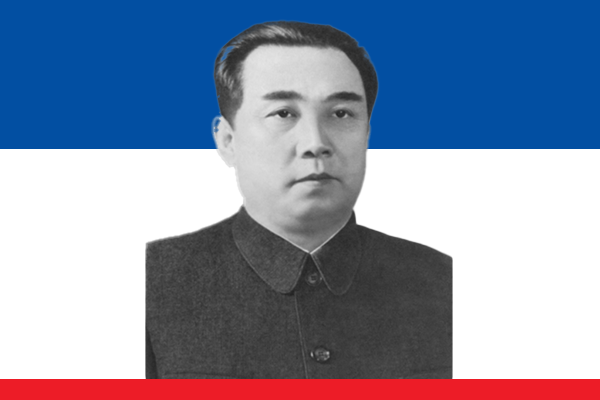
Early Life and Revolutionary Background
Kim Il Sung was born in 1912 in what then Japanese-occupied Korea was. Growing up under colonial rule deeply shaped his political outlook and fueled his opposition to foreign domination. As a young man, he became involved in anti-Japanese resistance movements and later joined communist guerrilla groups operating in Manchuria. These experiences helped him build a reputation as a revolutionary fighter and nationalist leader.
During the Second World War, Kim Il Sung worked closely with Soviet-backed forces. With Japan’s defeat in 1945, the Korean Peninsula was divided, and Kim emerged as a key political figure in the Soviet-controlled northern region. His revolutionary credentials and loyalty to socialist ideology positioned him as a suitable leader for the newly forming state.
Rise as Prime Minister of North Korea
In 1948, North Korea was officially established, and Kim Il Sung became its first Prime Minister. From the beginning, he focused on consolidating power and eliminating political rivals. He worked systematically to bring government institutions, the military, and the ruling party under his direct control.
As Prime Minister, Kim Il Sung promoted land reforms, nationalized major industries, and introduced centralized economic planning. These policies aimed to reshape society along socialist lines and weaken traditional power structures. While these reforms initially gained popular support among peasants and workers, they also laid the groundwork for a highly controlled political system.
Leadership During the Korean War
One of the most defining events of Kim Il Sung’s tenure as Prime Minister was the Korean War (1950–1953). Seeking to reunify the peninsula under his leadership, Kim launched a military campaign against South Korea. The war resulted in massive destruction and loss of life, ending in a ceasefire rather than a peace treaty.
Despite the war’s devastating consequences, Kim Il Sung used it to strengthen his authority. He portrayed himself as a defender of national sovereignty and used wartime conditions to justify tighter political control, expanded military power, and increased surveillance over society.
Ideology and Governance
Kim Il Sung developed the political philosophy known as Juche, which emphasized self-reliance, independence, and national dignity. Under his leadership as Prime Minister, Juche became the guiding ideology of the state, shaping domestic and foreign policy alike.
Governance under Kim Il Sung relied heavily on loyalty to the leader. He promoted a personality-centered system in which political legitimacy flowed from his revolutionary image. Over time, this approach transformed the government into a tightly controlled structure where dissent was suppressed and political unity was enforced.
Transition from Prime Minister to President
In 1972, North Korea adopted a new constitution, and Kim Il Sung transitioned from Prime Minister to President, a role that further elevated his authority. By this time, he had already established a stable power base and prepared the system for long-term continuity.
His years as Prime Minister were crucial in shaping North Korea’s institutions, economy, and political culture. The centralized leadership model and ideological framework he built during this period continued to define the country long after he left the prime ministerial office.
Legacy of Kim Il Sung as Prime Minister
Kim Il Sung’s legacy as Prime Minister remains deeply complex. Supporters view him as a revolutionary leader who resisted foreign domination and built a new state from the ruins of colonial rule. Critics, however, point to the authoritarian system, economic challenges, and political repression that developed under his leadership.
Regardless of perspective, Kim Il Sung’s tenure as Prime Minister laid the foundations of modern North Korea. His influence extended far beyond his lifetime, shaping a political system that remains one of the most distinctive and enduring in the world today.