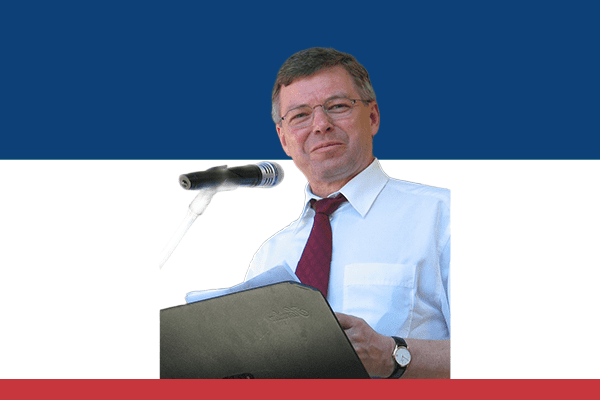
Early Life and Education
Kjell Magne Bondevik was born on September 3, 1947, in Molde, Norway. He grew up in a religious and socially responsible family that shaped his moral values and political beliefs. From a young age, he showed interest in public service and community welfare.
He studied theology at the Norwegian School of Theology in Oslo and later worked as a Lutheran minister. His educational background strengthened his communication skills and deepened his understanding of ethics, justice, and social equality. These qualities later influenced his political decisions and leadership style.
Entry into Politics
Bondevik entered politics through the Christian Democratic Party of Norway. He quickly gained recognition because of his integrity, intelligence, and dedication to public welfare. In 1973, he became a member of the Norwegian Parliament, representing the Christian Democratic Party.
As a parliamentarian, he focused on education, family welfare, healthcare, and ethical governance. He actively participated in political discussions and worked hard to build cooperation among different political groups. His ability to create dialogue and consensus helped him rise within the party leadership.
First Term as Prime Minister
In 1997, Kjell Magne Bondevik became Prime Minister of Norway for the first time. He led a centrist coalition government and focused on environmental protection, education, and social welfare. Instead of promoting aggressive political conflicts, he encouraged cooperation and balanced decision-making.
During his leadership, Norway strengthened its commitment to peacebuilding and humanitarian aid. Bondevik also promoted sustainable development and environmental responsibility. He believed that political leaders should protect both people and nature for future generations.
However, his first government ended in 2000 after disagreements over environmental policies related to gas power plants. Even after losing power, Bondevik maintained public respect because he defended his principles and values.
Second Term as Prime Minister
Bondevik returned as Prime Minister in 2001 and served until 2005. During his second term, he focused on economic stability, healthcare reforms, education, and international diplomacy. He worked to improve Norway’s role in global peace efforts and humanitarian assistance.
Under his leadership, Norway actively supported international cooperation and conflict resolution. Bondevik strongly supported human rights and democratic values. He also encouraged dialogue between religions and cultures to promote peace and understanding.
His government strengthened Norway’s reputation as a peaceful and socially progressive nation. Through careful leadership and ethical decision-making, he maintained political stability during important national and international challenges.
Humanitarian and International Work
After leaving office, Bondevik continued his humanitarian and diplomatic work. He founded the Oslo Center, an organization that promotes democracy, peacebuilding, and religious tolerance around the world. Through this organization, he supports political reforms and encourages cooperation between different communities and nations.
Bondevik also participates in international conferences and humanitarian projects. He remains an influential voice in discussions about democracy, leadership, and human rights. His post-political career demonstrates his continued dedication to global peace and social justice.
Leadership Style and Legacy
Kjell Magne Bondevik built his reputation on honesty, humility, and ethical leadership. Rather than using aggressive politics, he encouraged dialogue and cooperation. Many people admired his calm personality and his commitment to moral principles.
His leadership influenced Norwegian politics by promoting social welfare, environmental awareness, and peaceful diplomacy. He showed that leaders can remain strong while acting with kindness and integrity.
Today, Bondevik is remembered as a principled statesman who placed public service above personal ambition. His contributions continue to inspire politicians, students, and humanitarian workers around the world.
Conclusion
Kjell Magne Bondevik played a significant role in shaping modern Norway through ethical leadership and humanitarian values. As Prime Minister and international advocate, he promoted democracy, peace, and social welfare. His dedication to cooperation and justice created a lasting impact on Norwegian society and global humanitarian efforts.