Mr. Knud Kristensen
In Office: 7 November 1945 – 13 November 1947
Political Party: Venstre
Home State: Ringkøbing
Lifespan: 1880–1962
Country: Denmark
Image credits available here.
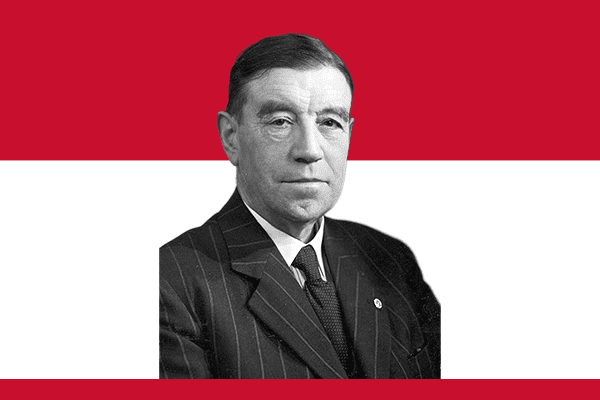
Early Life and Education
Knud Kristensen was born on October 26, 1880, in Ringkobing County, Denmark. He grew up in a farming family, which influenced his interest in agriculture and rural development. From a young age, he understood the challenges faced by farmers and rural communities. Instead of pursuing a life in the cities, he remained connected to agricultural work and local affairs.
He received his education in Denmark and later became actively involved in farming. His practical experience helped him understand the economic and social conditions of ordinary Danish citizens. These experiences shaped his political beliefs and strengthened his desire to serve the nation.
Entry into Politics
Knud Kristensen entered politics through local government and gradually gained recognition for his leadership abilities. He joined the Venstre Party, one of Denmark’s major political parties, which traditionally supported farmers and rural interests. His honest approach and dedication earned him public support.
In 1920, he became a member of the Danish Parliament. During his years in Parliament, he focused on agriculture, economic development, and improving living conditions in rural areas. He actively participated in debates and worked hard to protect the interests of Danish farmers.
Prime Minister of Denmark
In 1945, after the end of World War II, Knud Kristensen became the Prime Minister of Denmark. The country faced serious economic and social challenges after the war, and Kristensen accepted the responsibility of guiding Denmark toward recovery.
As Prime Minister, he worked to rebuild the economy and strengthen democratic institutions. He encouraged cooperation among political parties and promoted stability in Danish society. Instead of creating division, he emphasized unity and national progress.
Kristensen also supported efforts to improve agriculture and food production. Since Denmark relied heavily on farming, he believed that a strong agricultural sector would help the country recover economically. His government introduced policies that supported farmers and rural communities.
The Schleswig Issue
One of the most controversial moments of Kristensen’s political career involved the Schleswig issue. After World War II, he wanted Southern Schleswig, a region in Germany with a Danish minority population, to become part of Denmark again. He strongly supported the idea because he believed it would strengthen Danish national identity.
However, many political leaders disagreed with him. The disagreement created tension within the government and eventually led to the collapse of his administration in 1947. Although he lost political support on this issue, he remained committed to his beliefs and continued serving the public.
Later Political Career
After leaving the position of Prime Minister, Knud Kristensen continued participating in Danish politics. He remained an influential member of the Venstre Party and continued advocating for rural development and national interests.
In 1953, he founded the Independent Party because of disagreements within Venstre. Although the new party did not become highly successful, Kristensen demonstrated his independent thinking and strong commitment to his principles.
Throughout his political life, he worked actively to improve Danish society. His dedication to democracy and public service earned him respect from supporters and political opponents alike.
Legacy and Contributions
Knud Kristensen left a lasting impact on Danish politics. He guided Denmark through an important period after World War II and helped strengthen the country’s democratic system. His focus on agriculture and rural development influenced Danish economic policies for many years.
People remember him as a determined and hardworking leader who valued honesty and national unity. Even during political conflicts, he defended his ideas with courage and conviction. His leadership style reflected responsibility, discipline, and dedication to public service.
Conclusion
Knud Kristensen played an important role in modern Danish history. Through active leadership and strong political commitment, he helped Denmark recover after World War II and supported the growth of democratic institutions. His contributions to agriculture, politics, and national development continue to be remembered today.