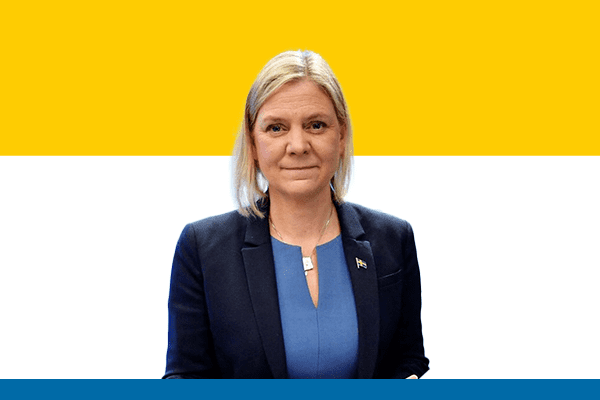
Early Life and Education
Magdalena Andersson was born on January 23, 1967, in Uppsala, Sweden. She grew up in a politically aware environment that encouraged discussion and critical thinking. She pursued higher education at Uppsala University, where she studied economics. To strengthen her expertise, she continued her studies at the Stockholm School of Economics and later attended Harvard University.
These academic experiences equipped her with a strong understanding of economic systems and policy-making. She actively applied her knowledge to real-world challenges, preparing herself for a career in public service.
Early Political Career
Magdalena Andersson began her political journey with the Social Democratic Party. She worked as a political advisor and gradually earned recognition for her analytical skills and dedication. Instead of remaining in the background, she actively contributed to policy development and strategic planning.
She held various important roles, including serving as State Secretary at the Ministry of Finance. In this position, she helped shape Sweden’s economic policies and demonstrated her ability to manage complex financial matters effectively.
Minister of Finance
In 2014, Magdalena Andersson became Sweden’s Minister of Finance. She took charge of the country’s economic strategy and worked to maintain fiscal discipline while supporting welfare programs. She actively managed government spending, strengthened public finances, and promoted sustainable economic growth.
Rather than relying on passive governance, she introduced reforms and ensured accountability in financial management. Her leadership helped Sweden maintain economic stability during challenging global conditions.
Prime Minister of Sweden
In November 2021, Magdalena Andersson became the Prime Minister of Sweden, marking a historic milestone as the first woman to hold the office. Although her initial appointment faced procedural challenges, she quickly returned to office and led the government with determination.
As Prime Minister, she actively addressed key issues such as economic recovery, climate change, and national security. She communicated policies clearly and worked to build consensus within a fragmented political environment. Her leadership style emphasized responsibility, transparency, and decisive action.
Leadership Style and Achievements
Magdalena Andersson leads with confidence and clarity. She focuses on practical solutions rather than theoretical debates. She actively engages with citizens and stakeholders, ensuring that policies reflect public needs.
Her achievements include strengthening Sweden’s economic framework, promoting gender equality, and supporting environmental sustainability. She has also played a role in guiding Sweden through international challenges, reinforcing the country’s global standing.
Challenges and Political Landscape
Magdalena Andersson has navigated a complex political environment marked by coalition dynamics and rising political competition. Instead of avoiding challenges, she has confronted them directly and worked to maintain stability.
She has faced criticism and opposition, yet she continues to defend her policies and adapt her strategies. Her resilience and commitment to democratic values define her political career.
Legacy and Influence
Magdalena Andersson’s leadership represents progress and transformation in Swedish politics. She has inspired many by breaking barriers and demonstrating effective governance. She continues to influence policy discussions and political direction in Sweden.
Her active approach to leadership ensures that she remains a significant figure in both national and international contexts.
Conclusion
Magdalena Andersson stands as a strong and influential leader in Sweden. Through her active governance, economic expertise, and commitment to public service, she has shaped modern Swedish politics. Her journey reflects determination, capability, and a forward-looking vision.