Mahinda Rajapaksa
In Office-Term 1: 6 April 2004 – 19 November 2005
Term 2: 26 October 2018 – 15 December 2018
Term 3: 21 November 2019 – 9 May 2022
Political Party: Sri Lanka Podujana Peramuna
Home State: Hambantota
Lifespan: born 1945
Country: Sri Lanka
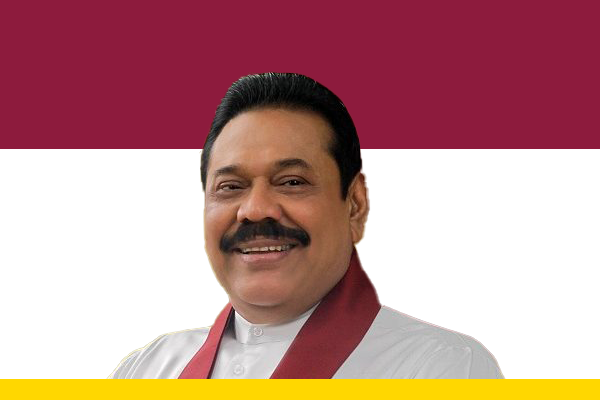
Early Life and Political Background
Percy Mahinda Rajapaksa was born on November 18, 1945, in Weeraketiya, in Sri Lanka’s southern Hambantota District. He came from a prominent political family; his father, D. A. Rajapaksa, served as a well-known Member of Parliament. Mahinda studied at Richmond College in Galle and later at Thurstan College in Colombo. After training as a lawyer, he entered politics at age 24. In 1970, he won a seat in Parliament from the Beliatta electorate as a candidate of the Sri Lanka Freedom Party (SLFP), becoming the country’s youngest MP at the time.
Political Rise and Ministerial Roles
Although he lost his seat in the 1977 general election during the UNP landslide, Rajapaksa returned to Parliament in 1989. He steadily built a reputation as a champion of human rights, especially during the 1987–89 JVP insurrection, when he openly criticized state-sponsored violence. Under President Chandrika Kumaratunga’s government, he served in key cabinet roles, including Minister of Labour and Minister of Fisheries, where he expanded his political influence and consolidated public support.
Presidency and End of Civil War
In 2005, Rajapaksa ran for president and defeated UNP leader Ranil Wickremesinghe. Upon assuming the presidency, he adopted a hardline stance against the LTTE and authorized a massive military campaign to defeat them. By May 2009, government forces had successfully ended the decades-long civil war by killing LTTE leader Velupillai Prabhakaran and dismantling the militant group.
Many Sri Lankans hailed Rajapaksa’s victory as a historic national achievement. Voters re-elected him in 2010 with a strong mandate. Following the war, he prioritized infrastructure development—initiating ambitious projects to build roads, ports, airports, and power plants, particularly in the country’s south and war-affected northern regions.
Criticism and Controversies
Despite his popularity, Rajapaksa attracted mounting criticism during and after the war. Human rights organizations accused his administration of wartime abuses and suppressing dissent. Critics also charged his government with media repression and large-scale corruption. He placed several family members in powerful political and administrative roles, which observers widely labeled as nepotism.
After his 2010 re-election, Rajapaksa pushed through the 18th Amendment to the Constitution, abolishing presidential term limits and greatly enhancing executive powers. This move alarmed civil society groups and international observers, who viewed it as a threat to democratic governance.
Electoral Defeat and Political Comeback
In 2015, Rajapaksa lost the presidency in a surprising defeat to Maithripala Sirisena, his former ally who campaigned on promises of reform and transparency. Despite the loss, Rajapaksa remained a dominant political figure. In 2019, when his brother Gotabaya Rajapaksa won the presidency, Mahinda reclaimed national leadership by becoming Prime Minister.
He served in that role until 2022. During Sri Lanka’s economic crisis that year, mass protests erupted against the government’s handling of the economy. As public pressure intensified, Rajapaksa resigned in May 2022, bringing his term as Prime Minister to an end.
Legacy
Mahinda Rajapaksa continues to stand as one of the most influential and polarizing figures in modern Sri Lankan politics. Supporters view him as the strong leader who unified the country and ended the civil war. Critics associate him with authoritarianism, corruption, and democratic backsliding. His legacy remains inseparable from the war’s end, the sweeping development that followed, and the controversies that defined his rule.