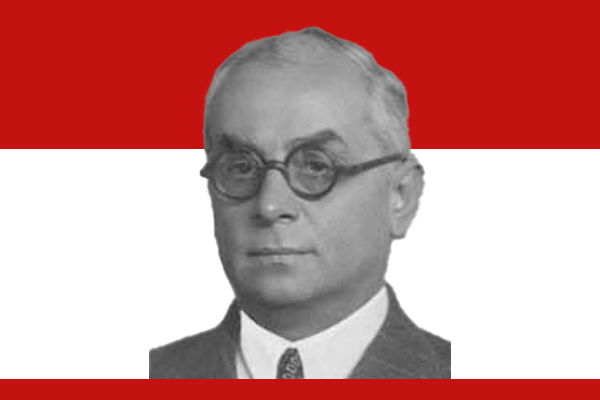
Early Life and Political Awakening
Mahmut Celâl Bayar was born in 1883 in Bursa, then part of the Ottoman Empire. He received his education locally and entered public life at a young age. Bayar joined the Committee of Union and Progress, where he developed strong organizational and leadership skills. During the Turkish War of Independence, he actively supported Mustafa Kemal Atatürk and contributed to the nationalist movement. His early political experiences shaped his belief in national sovereignty, economic independence, and strong state institutions.
Role in Economic Development
Bayar played a crucial role in Turkey’s early economic planning. He became one of the architects of Turkey’s state-led industrialization policies during the 1920s and 1930s. As Minister of Economy, he actively promoted the establishment of national banks, factories, and industrial enterprises. Bayar believed that economic strength formed the foundation of political independence. He supported mixed economic policies that balanced state control with private enterprise, a vision that later influenced his political philosophy.
Prime Ministership of Mahmut Celâl Bayar
Mahmut Celâl Bayar served as Prime Minister of Turkey from 1937 to 1939. During his tenure, he focused on stabilizing the economy and strengthening administrative efficiency. He actively worked to continue Atatürk’s reforms while adapting them to changing domestic and international conditions. Bayar emphasized economic growth, infrastructure development, and institutional stability. Although his term as Prime Minister remained relatively short, he left a lasting impression through his pragmatic approach to governance and economic policy.
Transition to Democratic Politics
After leaving the prime ministerial office, Bayar continued to influence Turkish politics. In the post–Second World War period, he strongly supported the transition to multi-party democracy. He co-founded the Democrat Party in 1946, actively challenging the long-standing dominance of the single-party system. Bayar promoted political pluralism, civil liberties, and economic liberalization. His leadership encouraged wider political participation and helped reshape Turkey’s democratic landscape.
Presidency and National Impact
Mahmut Celâl Bayar became President of Turkey in 1950 following the Democrat Party’s historic electoral victory. As president, he actively represented national unity while supporting the government’s reform agenda. His presidency symbolized the success of democratic transition in Turkey. Bayar’s leadership emphasized respect for the popular will and constitutional governance. Even during times of political tension, he maintained a strong commitment to democratic legitimacy.
Legacy and Historical Significance
Mahmut Celâl Bayar left a deep and lasting legacy in Turkish political history. He actively contributed to economic modernization, democratic development, and institutional reform. His journey from revolutionary activist to Prime Minister and President reflects Turkey’s broader transformation in the twentieth century. Bayar remains remembered as a leader who believed in progress through stability, democracy, and economic strength. His life and career continue to offer valuable lessons in leadership and political vision.