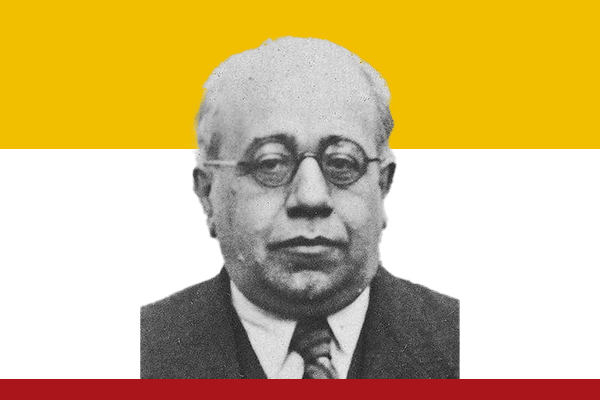
Mr. Manuel Azaña
In Office: 19 February 1936 – 10 May 1936
14 October 1931 – 12 September 1933
Political Party: Republican Action
Home State: Alcalá de Henares
Lifespan: 1880–1940
Country: Spain
Image credits available here.
Early Life and Education
Manuel Azaña was born on January 10, 1880, in Alcalá de Henares, Spain. His family encouraged him to pursue education, and he developed an early passion for literature and politics. He studied law at the University of Zaragoza and later earned his doctorate in Madrid. As a young intellectual, Azaña engaged deeply with liberal and republican ideas that influenced his political philosophy. His interest in modern European thought inspired him to advocate for a progressive and democratic Spain.
Emergence in Spanish Politics
Azaña began his political career with determination and idealism. He joined the Republican movement and helped establish the Republican Action Party in 1925. Through his writings and speeches, he criticized Spain’s monarchy and the influence of the Church in state affairs. When the Second Spanish Republic was proclaimed in 1931, Azaña played a key role in shaping its direction. His eloquence and clarity made him a respected figure among reformists. As Minister of War, he initiated significant changes to modernize the army and reduce military interference in politics.
Leadership as Prime Minister
In 1931, Azaña became Prime Minister of Spain, marking the height of his political influence. He worked tirelessly to implement social and economic reforms aimed at building a more equitable nation. He strengthened secular education, promoted workers’ rights, and pursued land reforms to address rural inequality. Azaña believed that Spain could only progress through education, justice, and rational governance. His administration reduced the Church’s power in schools and public life, reflecting his vision of a secular republic.
Azaña’s government faced resistance from conservative and religious groups who opposed his reforms. Despite intense criticism, he continued to defend democratic principles and civil liberties. He emphasized the importance of national unity based on shared values rather than privilege. His reformist zeal, however, deepened divisions between the left and right, foreshadowing the political crisis that would engulf Spain.
Challenges and the Civil War
When the political climate in Spain became increasingly unstable, Azaña remained committed to peaceful governance. In 1936, the leftist coalition known as the Popular Front won the general elections, and Azaña became President of the Republic. He aimed to reconcile Spain’s divided factions and prevent violence. Unfortunately, his hopes were shattered when a military uprising led by General Francisco Franco ignited the Spanish Civil War.
Throughout the conflict, Azaña tried to preserve constitutional authority and prevent chaos. He appealed for unity and compassion, urging both sides to respect human life. However, the brutal nature of the war overwhelmed his efforts. He watched helplessly as the country descended into violence and destruction. His speeches during this time reflected both sorrow and determination, expressing his belief that Spain’s future must rest on freedom and justice.
Exile and Legacy
After the fall of the Republican government in 1939, Azaña fled to France to escape persecution. Even in exile, he continued to advocate for peace and reconciliation among Spaniards. He lived his final years in Montauban, where he died on November 3, 1940. His death marked the end of an era, but his ideas endured.
Manuel Azaña remains one of Spain’s most significant political figures. His vision for a democratic and secular Spain influenced future generations who sought to rebuild the nation after dictatorship. Historians remember him not only as a statesman but also as a man of intellect, courage, and moral conviction.
Conclusion
Prime Minister Manuel Azaña’s leadership embodied Spain’s struggle between tradition and modernity. Through education, reform, and unwavering faith in democracy, he sought to create a nation grounded in equality and reason. Although his era ended in tragedy, his ideals continue to inspire Spain’s pursuit of freedom and justice.