Mr. Mark Rutte
In Office: 14 October 2010 – 2 July 2024
Political Party: People’s Party for Freedom and Democracy
Home State: The Hague
Lifespan: born 1967
Country: Netherland
Image credits available here.
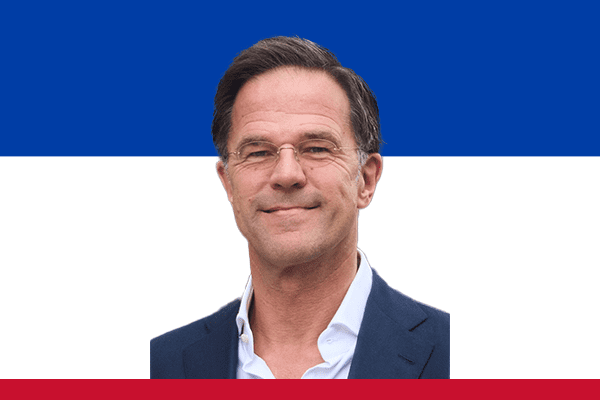
Early Life and Political Career
Mark Rutte was born on February 14, 1967, in The Hague. He studied history at Leiden University, where his interest in politics was developed. After completing his education, he worked in the private sector before entering politics.
Rutte joined the People’s Party for Freedom and Democracy (VVD), where his leadership abilities were quickly recognized. Several important roles were held by him within the party and government, including State Secretary positions. In 2006, he was elected as the leader of the VVD, marking a turning point in his political journey.
Rise to Prime Minister
In 2010, the VVD emerged as the largest party in the Dutch general elections. After coalition negotiations were completed, Mark Rutte was appointed as Prime Minister. A minority government was formed under his leadership, supported by other parties. Since then, multiple coalition governments have been successfully led by him, demonstrating his negotiation and consensus-building skills.
Economic reforms were introduced by his government to strengthen the Dutch economy after the global financial crisis. Measures to reduce public spending and encourage growth were implemented. His leadership during crises, including the COVID-19 pandemic, was widely noted for its calm and structured approach.
Leadership Style and Achievements
Mark Rutte is known for his practical and down-to-earth leadership style. Policies are often approached with a focus on realism rather than ideology. Strong emphasis has been placed on economic stability, employment, and innovation.
Under his leadership, the Netherlands has remained a key player in the European Union. Active participation in international diplomacy has been maintained, and cooperation with global partners has been strengthened.
Several achievements can be attributed to his tenure. Economic recovery after financial downturns was achieved, unemployment rates were reduced, and international trade relations were expanded. His ability to maintain stable coalition governments in a multi-party system has been widely appreciated.
Challenges and Criticism
Despite his long tenure, criticism has also been faced by Mark Rutte. Controversies, including the childcare benefits scandal, led to the resignation of his government in 2021. However, leadership was continued by him after subsequent elections, showing resilience and public support.
Opposition parties have often criticized his policies on social welfare and immigration. Decisions taken during crises have sometimes been questioned. Nevertheless, his political longevity reflects his adaptability and ability to regain trust.
Conclusion
Mark Rutte’s career highlights the importance of adaptability, negotiation, and steady leadership in modern politics. A significant role has been played by him in shaping the Netherlands’ economic and political landscape over the past decade. His legacy continues to evolve as he remains an influential figure in European politics.