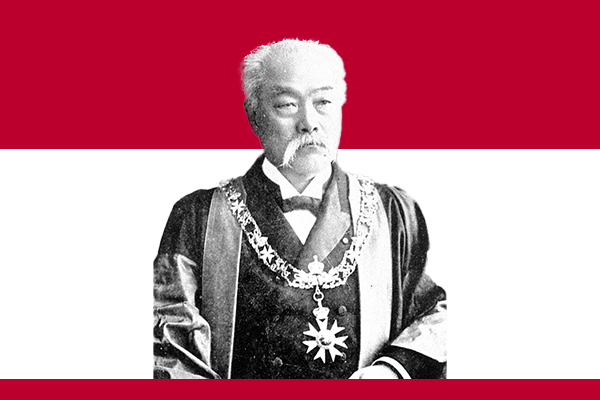
Early Life and Education
Matsukata Masayoshi was born on February 25, 1835, in Kagoshima, Japan. He grew up during a period of significant change when Japan faced increasing foreign influence. He studied Western science and technology to understand modern administrative and economic systems. His education prepared him to participate actively in Japan’s transformation during the Meiji Restoration.
Entry into Politics
The Meiji government recognized Matsukata’s intelligence and administrative abilities early in his career. He joined the new regime after the fall of the Tokugawa shogunate in 1868. The government entrusted him with financial responsibilities, where he focused on stabilizing the nation’s economy. His dedication and administrative efficiency quickly earned him higher positions within the Meiji administration.
Economic Reforms and Leadership
When Japan faced severe inflation in the 1880s, Matsukata took decisive action. He introduced the “Matsukata Deflation,” a series of policies designed to stabilize the currency and reduce inflation. He restructured the national tax system and established the Bank of Japan in 1882. These reforms created a modern financial framework and encouraged industrial growth. By prioritizing fiscal discipline, Matsukata laid the foundation for Japan’s economic modernization.
First Term as Prime Minister (1891–1892)
Matsukata Masayoshi became Japan’s fourth Prime Minister in May 1891. During his first term, he emphasized economic stability and administrative reforms. He strengthened Japan’s financial institutions and promoted infrastructure development. Despite political opposition, he pushed for modernization to prepare Japan for global competition. However, internal conflicts and political disagreements eventually ended his first term in August 1892.
Second Term as Prime Minister (1896–1898)
Matsukata returned as Prime Minister in September 1896. This time, he focused on strengthening Japan’s international position. He supported military expansion and modernized administrative systems to enhance national security. He encouraged industrialization, promoted foreign trade, and improved Japan’s transportation networks. His leadership during this period helped Japan emerge as a stronger nation in the late 19th century.
Role in the Meiji Government
Beyond his role as Prime Minister, Matsukata held several key positions, including Finance Minister and Privy Council President. He worked closely with Emperor Meiji to implement reforms that modernized Japan’s political and economic institutions. His ability to manage finances effectively made him one of the most influential leaders of the Meiji era.
Later Life and Legacy
Matsukata Masayoshi retired from politics in the early 20th century but remained a respected elder statesman. He witnessed Japan’s transformation from a feudal society into a modern industrial nation. His economic reforms, particularly the creation of the Bank of Japan, continued to shape Japan’s financial policies long after his retirement. He passed away on July 2, 1924, leaving behind a legacy of modernization and economic stability.
Conclusion
Matsukata Masayoshi actively shaped Japan’s political and economic landscape during the Meiji era. Through financial reforms, administrative modernization, and strong leadership, he guided Japan toward stability and growth. His dedication to fiscal discipline and modernization made him one of Japan’s most significant Prime Ministers.