Mr. Mohammad Ali Bogra
In Office: 17 April 1953 – 12 August 1955
Political Party: Muslim Leage
Home State: Backergunge Bengal
Lifespan: 1909–1963
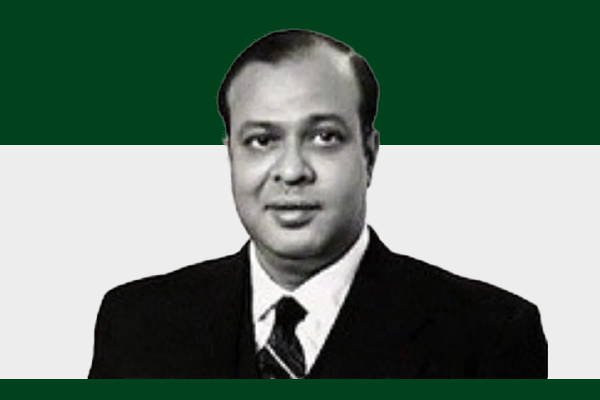
Early Life and Education
Born on October 19, 1909, in Bogra, Bengal Presidency (now in Bangladesh), Mohammad Ali hailed from a prominent Muslim zamindar family. He received his early education in Calcutta and later graduated from the University of Calcutta. His aristocratic background and elite education laid the foundation for his entry into politics and diplomacy.
Political Career Before Becoming Prime Minister
Bogra began his political journey by joining the All-India Muslim League, where he worked closely with key figures advocating for the rights of Muslims in British India. He was elected to the Bengal Legislative Assembly and held several ministerial roles before and after the partition in 1947.
After the creation of Pakistan, he served as the Ambassador to Burma, High Commissioner to Canada, and most notably, Ambassador to the United States from 1950 to 1953. His exceptional diplomatic performance, especially in Washington D.C., earned him the trust of the military and political elite in Pakistan.
Tenure as Prime Minister of Pakistan (1953–1955)
Background and Appointment
In April 1953, after the dismissal of Prime Minister Khawaja Nazimuddin, Governor-General Ghulam Mohammad appointed Bogra as Prime Minister. Though serving as Pakistan’s ambassador in the U.S. at the time, Bogra accepted the role and returned to lead the country during a politically turbulent period.
The Bogra Formula
One of his most significant contributions was the Bogra Formula, a constitutional proposal aimed at resolving the East-West Pakistan representation crisis. The plan proposed a bicameral legislature:
- An upper house with equal representation from each province.
- A lower house based on population, giving East Pakistan a majority.
- Though the proposal initially received widespread approval, internal power struggles eventually prevented its implementation.
Foreign Policy Achievements
Bogra strengthened Pakistan’s international presence by forging stronger ties with the United States and participating in defense pacts such as SEATO (Southeast Asia Treaty Organization) and CENTO (Central Treaty Organization). His pro-Western alignment shaped Pakistan’s foreign policy for decades.
Post-Premiership and Diplomatic Service
After his removal in 1955, Bogra returned to diplomacy. He served once again as Ambassador to the U.S., and later as Foreign Minister of Pakistan under President Ayub Khan. He continued to advocate for Pakistan’s role on the global stage until his death in 1963.
Legacy and Impact
Mohammad Ali Bogra is remembered as a brilliant diplomat, articulate leader, and intellectual architect of early Pakistani statecraft. The Bogra Formula remains a notable attempt at resolving ethnic and regional imbalances within the country. He also laid the groundwork for a foreign policy that balanced Islamic identity with Western alliances.