Mr. Mohammad Daoud Khan
In Office: 7 September 1953 – 10 March 1963
Political Party: National Revelation Party
Home State: Kabul
Lifespan: 1909–1978
Country: Afghanistan
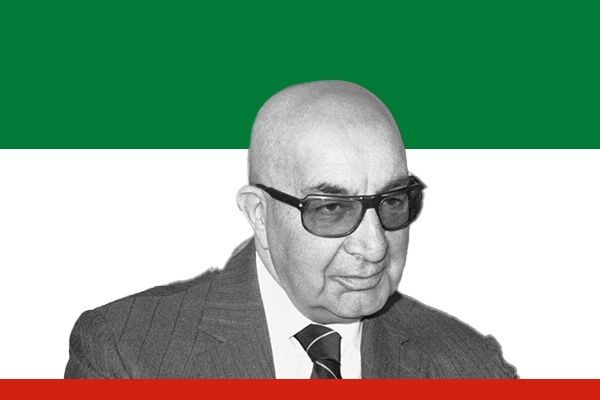
Early Life and Rise to Power
Mohammad Daoud Khan was born on July 18, 1909, in Kabul, Afghanistan, into the influential Barakzai dynasty. As a cousin and brother-in-law of King Zahir Shah, he held a strong position in the royal circle. Educated in Kabul and trained in the military, Daoud Khan quickly advanced, holding top posts such as Minister of Defense and Governor of Kandahar. His charisma, administrative ability, and nationalist ideals made him a dominant force in Afghan politics.
Prime Ministership (1953–1963)
In 1953, King Zahir Shah appointed Daoud Khan as Prime Minister, a role he held for ten years. During this time, he focused on modernizing Afghanistan’s economy and society. He turned to the Soviet Union for aid and technical support. His policies encouraged industrial growth, infrastructure development, and education reform, including progress in women’s rights—an ambitious move in a conservative society.
However, Daoud ruled with an authoritarian approach. He suppressed opposition and governed with firm control. His foreign policy became more aggressive, especially on the Pashtunistan issue. He supported uniting Pashtun areas of Pakistan with Afghanistan, which strained ties with Pakistan and led to border closures and economic strain.
In 1963, political tensions and growing opposition from King Zahir Shah forced Daoud Khan to resign.
Coup and Presidency (1973–1978)
On July 17, 1973, while King Zahir Shah was abroad, Daoud Khan staged a bloodless coup. He abolished the monarchy and established the Republic of Afghanistan. He assumed the roles of both President and Prime Minister, vowing reforms, anti-corruption efforts, and greater national independence.
As president, Daoud initially kept strong ties with the Soviet Union but later moved to reduce their influence. He sought closer relations with the West, Iran, and Arab countries. In 1977, he introduced a new constitution to consolidate power. This move sidelined leftist factions like the People’s Democratic Party of Afghanistan (PDPA), many of whom had supported his earlier coup.
His rule grew more autocratic. He alienated political allies and failed to address mounting economic and social unrest, creating instability.
Assassination and the Saur Revolution
On April 27, 1978, PDPA forces overthrew Daoud Khan in a violent coup known as the Saur Revolution. They assassinated him and his family. The coup began communist repaganize in an and triggered decades of conflict, including foreign invasions and civil war.
Legacy
Mohammad Daoud Khan is remembered as a nationalist and modernizer who aimed to build a strong, independent Afghan state. He advanced women’s rights, education, and economic growth, setting major changes in motion. Yet, his concentration of power, intolerance for dissent, and failure to manage political divisions contributed to his fall.