Mr. M. Hashim Maiwandwal
In Office: 2 November 1965 – 11 October 1967
Political Party: Independent ( Until 1966)
Progressive Democratic Party
Home State: Kabul
Lifespan: 1919–1973
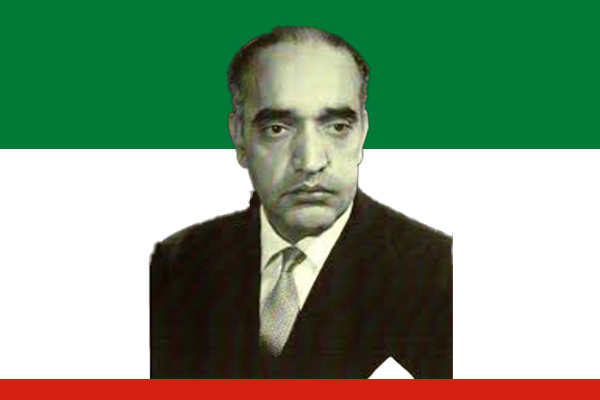
Early Life and Education
Mr. M. Hashim Maiwandwal was born in 1921 in Maiwand, Kandahar Province, Afghanistan. He came from a respected Pashtun family and showed early promise in education and intellectual pursuits. After completing primary school in Kandahar, he continued his studies in Kabul and later pursued education abroad. He mastered English, French, and Persian. His exposure to global ideas and political systems deeply shaped his progressive worldview.
Early Career and Diplomatic Roles
Mr. M. Hashim Maiwandwal began his public life as a journalist. He founded and edited newspapers that promoted reform, national unity, and modernization. His writing and political insight earned him national recognition. He then joined Afghanistan’s diplomatic corps and served in key roles as Ambassador to the United Kingdom, the United States, and the United Nations. These assignments gave him firsthand experience with democratic governance and development models, which later influenced his political goals.
Tenure as Prime Minister (1965–1967)
In 1965, during Afghanistan’s “Decade of Democracy” (1963–1973), King Zahir Shah appointed Maiwandwal as Prime Minister. As a pro-Western moderate, Maiwandwal aimed to modernize the country while preserving the monarchy and traditional Afghan values.
His government prioritized economic growth, institutional development, and political reform. He promoted private investment, expanded access to education, and worked to build a professional civil service. Politically, he strengthened parliamentary institutions and allowed greater press freedom, which encouraged public participation in national affairs.
Despite his reformist agenda, Maiwandwal encountered resistance from conservative elites, internal political divisions, and bureaucratic inefficiency. In 1967, he resigned, officially due to health reasons, though political pressure also contributed to his departure.
Arrest and Mysterious Death
After Mohammad Daoud Khan overthrew the monarchy in 1973 and declared a republic, the new regime accused Maiwandwal of plotting against the government. Authorities arrested him and placed him in the custody of the National Intelligence Service. On October 1, 1973, he died while in detention. Officials claimed he committed suicide, but credible sources reported that security agents tortured him to death. He became one of the first political prisoners to die under Daoud’s rule.
Legacy
People remember Mohammad Hashim Maiwandwal as a visionary reformer, a moderate democrat, and a patriot who tried to modernize Afghanistan peacefully. His time as Prime Minister marked one of the final attempts to merge democratic values with Afghan tradition before the country slid into authoritarianism and conflict.
Despite his tragic end, Maiwandwal’s ideals continue to inspire those who advocate for constitutional government, civil liberties, and moderate reform. His legacy serves as a reminder of Afghanistan’s lost potential and the enduring cost of political repression.