Mr. Hua Guofeng
In Office: 7 October 1976 – 28 June 1981
Political Party: Chinses Community Party
Home State: Jiaocheng
Lifespan: 1921–2008
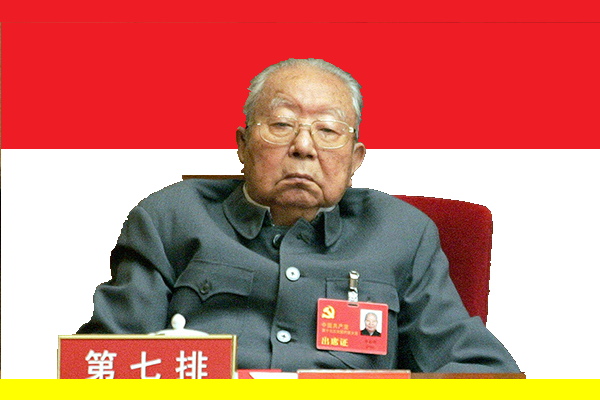
Early Life and Background
Hua Guofeng (华国锋), born Su Zhu (苏铸) on February 16, 1921, in Jiaocheng County, Shanxi Province, came from a humble peasant family. He became involved in revolutionary activities at a young age and joined the Chinese Communist Party (CCP) in 1938. During the anti-Japanese war and Chinese Civil War, Hua proved himself as a loyal and disciplined party worker. Over time, he steadily climbed the party ranks, mostly through administrative and regional positions.
Rise to Power
In the early 1970s, Hua gained national attention. In 1973, he was appointed Vice Premier, and in 1976, shortly before Mao Zedong’s death, he became Premier of the People’s Republic of China. Mao appeared to favor Hua as a successor in his final years. Mao even wrote the phrase “With you in charge, I’m at ease (你办事,我放心)” in reference to Hua, a symbolic endorsement that helped secure Hua’s authority.
After Mao’s death in September 1976, Hua quickly consolidated power. He was named Chairman of the CCP, Premier, and Chairman of the Central Military Commission, briefly becoming China’s top leader.
Ending the Cultural Revolution
Hua’s most historically significant act came just weeks after Mao’s death: he ordered the arrest of the “Gang of Four,” including Mao’s widow Jiang Qing. This action effectively ended the Cultural Revolution, a decade-long period of political and social upheaval. The move earned Hua popular support and secured his leadership in the short term.
Hua promoted the policy of the “Two Whatevers”—continuing Mao’s policies and instructions unquestioningly. This stance reflected his loyalty to Mao’s legacy, but it also limited his ability to address the country’s pressing economic and social problems.
Leadership and Challenges
While Hua began some modest reforms and modernization efforts, he lacked the bold vision needed to lead China through its post-Mao transformation. His approach was cautious and heavily tied to Maoist ideology. At the same time, Deng Xiaoping—who had been purged and rehabilitated multiple times—emerged as the leader of a powerful reformist faction within the party.
By 1980, Deng’s influence had grown significantly. Hua was gradually removed from power: he stepped down as Premier in 1980 and as Party Chairman in 1981. He was replaced by more reform-minded leaders, and Deng became the de facto leader of China.
Later Life and Legacy
After stepping down, Hua remained a low-profile figure, never openly opposing the new leadership. He served as a member of the Central Committee for several more years but had no real political influence.
Hua Guofeng’s legacy is mixed. He is often viewed as a transitional leader—the man who closed the door on the Cultural Revolution but did not fully open the path to reform. His most important legacy remains the peaceful removal of the Gang of Four, which paved the way for China’s reform era under Deng Xiaoping.
Conclusion
Hua Guofeng played a brief but crucial role in Chinese history. As Mao’s chosen successor, he preserved party unity during a sensitive period. While not remembered as a transformative reformer, Hua’s actions helped China move away from revolutionary excess and toward modernization and stability.