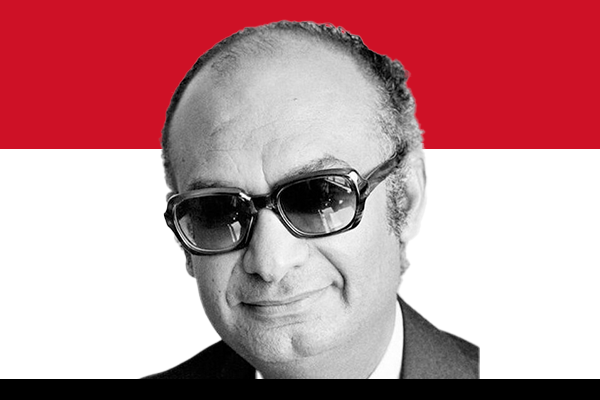
Early Background and Political Formation
Muhammad Said al-Attar emerged from a background shaped by education, public service, and exposure to bureaucratic systems. Before assuming the role of prime minister, he built his career within government circles where policy execution and administrative discipline mattered more than public rhetoric. This formative experience influenced his later approach to leadership, as he valued order, continuity, and institutional processes over dramatic political gestures.
His early political formation occurred during a time when governance required adaptability. Political leaders were expected not only to represent authority but also to ensure that the machinery of the state continued to function amid uncertainty. Al-Attar gained recognition as someone capable of working within these constraints.
Appointment as Prime Minister
Muhammad Said al-Attar assumed the office of prime minister during a politically sensitive period. His appointment reflected a desire for stability and administrative competence rather than radical reform. Leaders and institutions viewed him as a figure who could manage government affairs responsibly, maintain balance among competing interests, and prevent escalation during tense circumstances.
As prime minister, al-Attar approached his duties with restraint. He prioritized coordination among ministries and sought to ensure that government decisions aligned with existing legal and constitutional frameworks. His leadership emphasized continuity in governance rather than abrupt change.
Governance and Leadership Style
Al-Attar’s tenure as prime minister highlighted his methodical and pragmatic leadership style. He focused on administrative efficiency, internal security, and the functioning of public institutions. Rather than pursuing sweeping ideological programs, he concentrated on maintaining governmental stability and addressing immediate challenges faced by the state.
His leadership reflected an understanding that effective governance often depends on compromise and procedural discipline. Al-Attar worked closely with senior officials and advisors, valuing consultation and bureaucratic expertise. This approach helped reduce internal friction and allowed the government to function under pressure.
Challenges and Political Environment
The period during which Muhammad Said al-Attar served as prime minister presented multiple challenges. Political uncertainty, economic pressures, and public expectations tested the limits of executive authority. Al-Attar navigated these difficulties with caution, aiming to prevent instability while preserving state institutions.
He faced criticism from different sides, as is common for leaders operating in transitional or constrained political systems. Nevertheless, his response remained measured. He relied on institutional mechanisms rather than personal authority, reinforcing the role of governance structures over individual power.
Legacy and Historical Significance
Although Muhammad Said al-Attar’s time as prime minister did not involve dramatic transformations, his legacy lies in his emphasis on responsible administration. He represented a model of leadership focused on continuity, discipline, and institutional respect. His tenure demonstrated how governance can function even under restrictive or uncertain political conditions.
Al-Attar’s role remains important for understanding how states rely on experienced administrators during periods of transition. His contribution underscores the value of steady leadership when political systems face strain.
Conclusion
Prime Minister Muhammad Said al-Attar stands as an example of pragmatic leadership shaped by circumstance rather than ambition. His service highlighted the importance of administrative competence, restraint, and institutional loyalty. While not a figure of sweeping reform, his tenure contributed to maintaining governance and stability during a demanding period in political history.