Mr. Muhammad Yunus
Assumed Office: 6 January 2024 – Incumbent
Political Party: Independent
Home State: Hathazari
Lifespan: born 1940
Country: Bangladesh
Image credits available here.
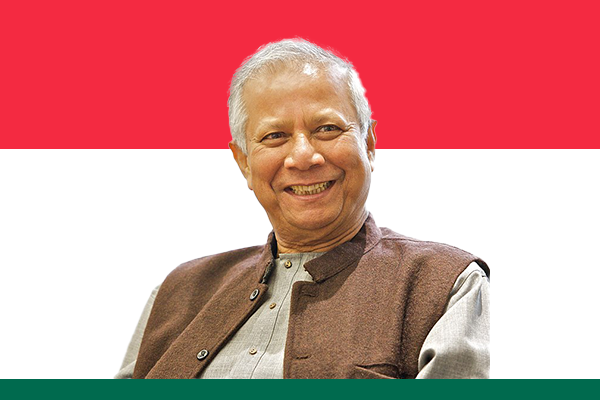
Muhammad Yunus: From Microfinance Pioneer to Interim Head of Bangladesh
Muhammad Yunus, born on June 28, 1940 in Chittagong, Bangladesh, studied economics at Vanderbilt University and later returned home to teach at Chittagong University. Over years, he developed a deep empathy for the poor, especially when he saw how hard rural workers struggled.
In 1976, Yunus experimented by lending small amounts of money—microloans—to impoverished villagers so they could start or sustain tiny businesses. He founded the Grameen Bank in 1983, building a banking model based on trust and community. Over time, the bank grew to serve millions, especially women, and became an international symbol of poverty alleviation.
Yunus’s work earned him global recognition. In 2006, he and Grameen Bank won the Nobel Peace Prize for promoting economic and social development from the bottom up.
In 2007, Yunus briefly entered politics by founding a political party, Nagorik Shakti (Citizen Power), but his real political breakthrough came much later.
Following widespread student protests in Bangladesh in 2024, the government led by Prime Minister Sheikh Hasina collapsed. On August 6, 2024, Yunus accepted the role of Chief Adviser of the interim government—a position often viewed as the country’s de facto prime minister.
As interim head, Yunus pledged to restore order, promote democracy, and organize free and fair elections. He faces the enormous task of rebuilding trust in public institutions, strengthening political stability, and steering economic reforms.
Beyond politics, Yunus continues to champion his economic philosophy. He calls for “social business” models—companies that aim to solve social problems rather than maximize profit. He also lays stress on innovation, sustainability, and financial inclusion, believing that capitalism can become a tool for social good.
Throughout his interim leadership, Yunus draws on his reputation as a global moral voice. He inspires confidence in many that his government can steer Bangladesh through its crisis, but he also draws criticism for potential conflicts of interest, given his deep ties with Grameen institutions.
In sum, Muhammad Yunus stands at a historic junction: a visionary economist-entrepreneur now fulfilling a political role. He seeks to use his legacy of empowering the poor to reshape governance, rebuild social trust, and lay the foundation for a more just Bangladesh.