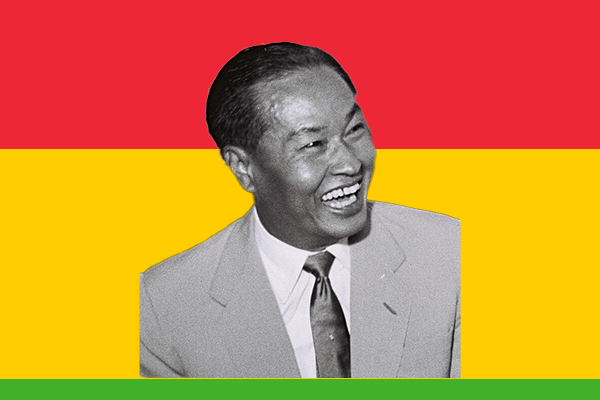
Early Life and Entry into Politics
Ne Win was born in 1911 and grew up during British colonial rule in Burma. As a young man, he actively joined nationalist movements that opposed colonial domination. He developed strong ties with revolutionary leaders and participated in underground resistance activities. These early experiences strengthened his belief in discipline, authority, and military leadership as tools for national unity.
Ne Win later joined the Burma Independence Army and quickly rose through the ranks. He earned recognition for his organizational skills and loyalty to the nationalist cause. After independence in 1948, he continued to serve in the military and steadily expanded his influence within the state.
Rise to Power as Prime Minister
Ne Win assumed the role of Prime Minister in 1958 during a period of political instability. Civil unrest, factionalism, and weak civilian leadership prompted the government to invite military intervention. Ne Win took control with the promise of restoring order and stability. He actively used military authority to suppress rebellions and reorganize administration.
Although he temporarily handed power back to civilian leaders, Ne Win permanently seized control in 1962 through a military coup. He dissolved parliament, suspended the constitution, and established a Revolutionary Council under his leadership.
Governance and the “Burmese Way to Socialism”
As Prime Minister, Ne Win introduced the “Burmese Way to Socialism,” a political and economic ideology that combined nationalism, socialism, and military control. He nationalized major industries, banks, and trade sectors. His government tightly controlled media, education, and political expression.
Ne Win aimed to reduce foreign influence and promote self-reliance. However, his policies isolated Myanmar from the global economy. Mismanagement and rigid controls weakened productivity and discouraged innovation. Over time, the economy deteriorated, and living standards declined sharply.
Authoritarian Rule and Military Dominance
Ne Win ruled through strict authoritarian methods. He banned opposition parties and allowed only one political organization under military supervision. He relied heavily on the armed forces to maintain control and silence dissent. His leadership emphasized loyalty, obedience, and centralized decision-making.
Under his rule, civil liberties suffered. Citizens faced censorship, limited political participation, and economic hardship. Despite criticism, Ne Win maintained power for decades by reinforcing military dominance and suppressing resistance.
Decline of Power and Resignation
By the late 1980s, widespread dissatisfaction erupted into mass protests. Economic collapse and public frustration weakened Ne Win’s authority. In 1988, facing nationwide uprisings, he stepped down from formal leadership. Although he withdrew from public office, the military system he created continued to influence Myanmar’s governance.
Legacy and Historical Assessment
Ne Win remains one of the most controversial figures in Myanmar’s history. He established long-term military control and reshaped the political system. While he claimed to protect national unity and independence, his policies led to economic decline and political repression.
Historians view Ne Win as a leader who centralized power effectively but failed to deliver prosperity or freedom. His legacy serves as a powerful lesson on the consequences of prolonged authoritarian rule and isolationist policies.