Mr. Nguyen Cao Ky
In Office: 19 June 1965 – 28 October 1967
Political Party: Military
Home State: Sơn Tây Ward
Lifespan: 1930–2011
Country: Vietnam
Image credits available here.
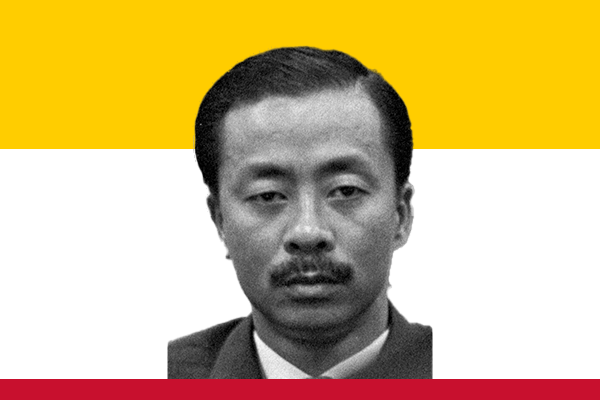
Early Life and Military Career
Nguyễn Cao Kỳ was born on September 8, 1930, in Sơn Tây, near Hanoi, in what was then French Indochina. From a young age, he showed a strong interest in aviation and national service. After finishing his studies, he joined the French-backed Vietnamese National Army and trained as a pilot. His military career developed rapidly because of his discipline, courage, and leadership skills.
When the French withdrew from Vietnam, Kỳ continued to serve under the newly established South Vietnamese government. He became one of the most skilled pilots in the Republic of Vietnam Air Force. His ability to lead under pressure and his loyalty to anti-communist ideals gained him respect among military officers and political leaders.
Rise to Political Power
Kỳ’s rise to political prominence began after the fall of several unstable governments in South Vietnam during the early 1960s. The country faced internal divisions, corruption, and continuous military coups. In 1965, a military council appointed Nguyễn Cao Kỳ as Prime Minister, hoping he could restore stability and unity. At just 34 years old, he became one of the youngest leaders in the region.
Policies and Leadership Style
As Prime Minister, Kỳ ruled with a firm and direct approach. He emphasized national unity and military discipline. He attempted to reduce corruption, improve administrative efficiency, and strengthen South Vietnam’s defense against communist forces. Although his government relied heavily on U.S. support, Kỳ insisted on maintaining Vietnamese sovereignty and pride.
He also worked to modernize the air force and strengthen relationships with rural communities through strategic programs. His leadership style combined charisma, confidence, and strict authority. Many admired his boldness, while others criticized his impulsive decisions.
Relationship with the United States
Nguyễn Cao Kỳ developed a complex relationship with the United States during the Vietnam War. American officials initially viewed him as a strong anti-communist ally. He collaborated closely with U.S. military and political advisers to combat North Vietnamese forces. However, he often clashed with American diplomats over strategies and autonomy. Kỳ believed that foreign involvement should support, not dominate, Vietnamese decisions.
Despite tensions, he maintained cooperation with the U.S. to sustain South Vietnam’s defense and economy. His flamboyant personality and confident public image made him a well-known figure internationally.
Transition and Later Political Role
In 1967, South Vietnam held presidential elections. Kỳ initially planned to run but later supported General Nguyễn Văn Thiệu as a unified military candidate to avoid division among leaders. Thiệu became president, and Kỳ served as vice president. During this period, Kỳ continued to influence national policies but grew increasingly frustrated with Thiệu’s concentration of power.
Their rivalry deepened over time, and by 1971, Kỳ withdrew from politics after Thiệu’s government tightened control. Kỳ’s influence faded as the war situation worsened and internal conflicts weakened South Vietnam’s stability.
Life in Exile
After the fall of Saigon in 1975, Nguyễn Cao Kỳ fled to the United States. He settled in California, where he lived a quiet life away from active politics. He occasionally gave interviews, shared his views on Vietnam’s future, and supported reconciliation between Vietnamese communities abroad and those in the homeland.
In his later years, Kỳ expressed regret over the suffering caused by the war and called for national unity among all Vietnamese people, regardless of ideology.
Legacy
Nguyễn Cao Kỳ left a controversial yet significant legacy. Many remembered him as a fearless pilot and a decisive leader who tried to guide South Vietnam through one of its most turbulent eras. Others criticized his authoritarian methods and his role in political instability. Regardless of opinions, his influence on Vietnam’s wartime politics remains undeniable.
He passed away on July 23, 2011, in Malaysia. His life reflected both the ambition and the turmoil of South Vietnam’s struggle for survival during the Vietnam War.